Cleaning is more than just keeping a space visually tidy, it directly affects health, safety, productivity, and overall well-being. For businesses, maintaining a clean office or industrial facility can improve employee morale, impress clients, and even reduce liability risks. For homeowners, a clean space supports hygiene and comfort.
Yet, going through the world of cleaning services can feel overwhelming. With terms like commercial cleaning, industrial cleaning, janitorial services, and commercial housekeeping, it’s easy to get lost. Many people ask questions like “what does commercial cleaning mean?” or “what does a maid service do?”, unsure of which service fits their needs.
This comprehensive guide is designed to clear that confusion. We’ll explain every type of cleaning service, define roles such as an industrial cleaner and a janitor, and break down commercial housekeeping versus residential maid services. By the end, you’ll understand the differences, benefits, and processes of professional cleaning, so you can make an informed choice that fits your space, budget, and safety requirements.
What is Commercial Cleaning?
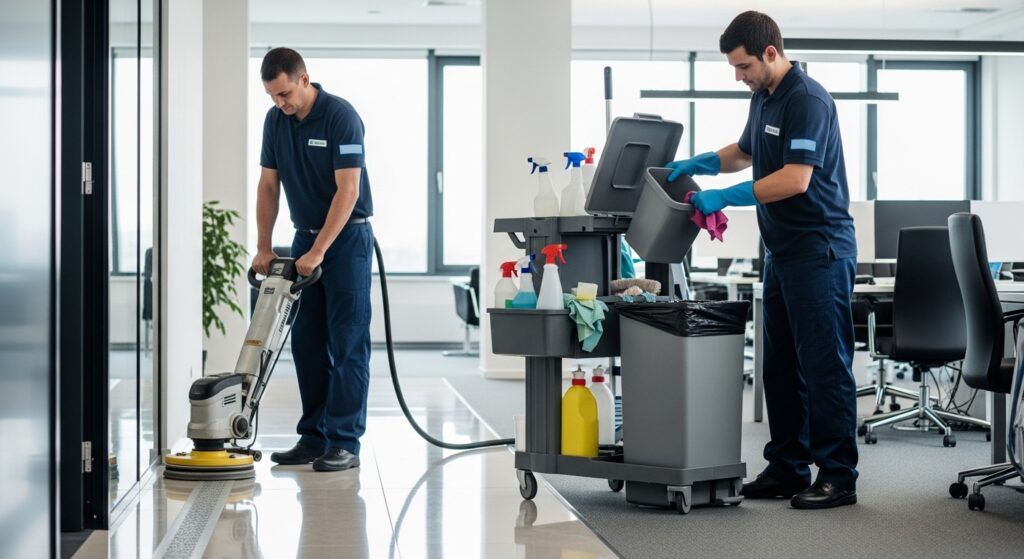
Commercial cleaning is professional, specialized cleaning for business, industrial, and public spaces, such as offices, hospitals, schools, retail stores, and commercial buildings, that goes beyond basic tidying. It includes routine maintenance, deep cleaning, sanitization, and specialized services (like floor waxing, window washing, and post-construction cleanup) performed by trained staff using commercial-grade equipment and standardized protocols to ensure hygiene, safety, and a professional appearance.
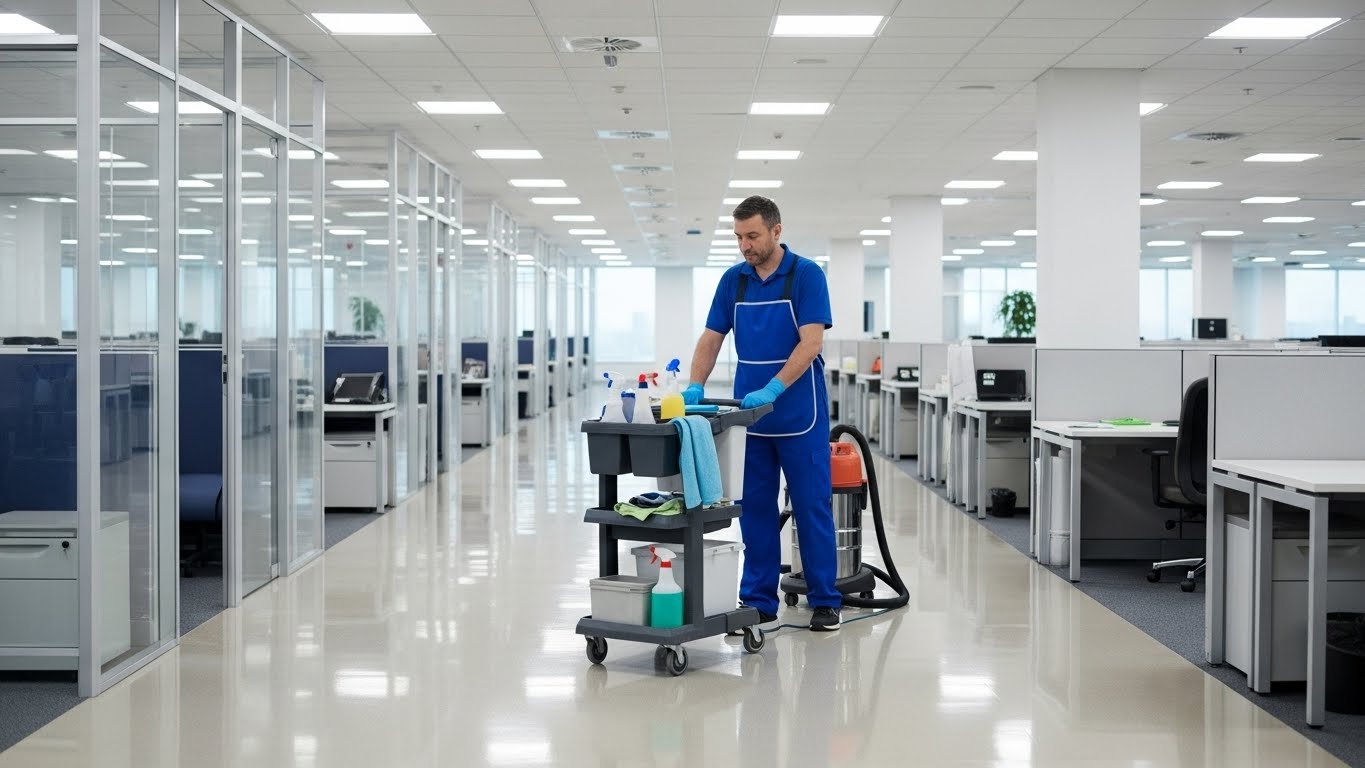
Key Aspects
- Scope: Large, high-traffic commercial environments with stricter hygiene needs than homes.
- Services: Daily cleaning, periodic deep cleaning, and specialty services.
- Clients: Offices, medical facilities, schools, retail stores, gyms, banks, and corporate buildings.
- Methods: Commercial equipment, trained staff, safety and sanitation standards.
- Benefits: Healthier workplaces, improved brand image, regulatory compliance.
Tasks include:
- Vacuuming carpets and mopping floors
- Dusting desks, shelves, and electronics
- Sanitizing restrooms and high-touch surfaces
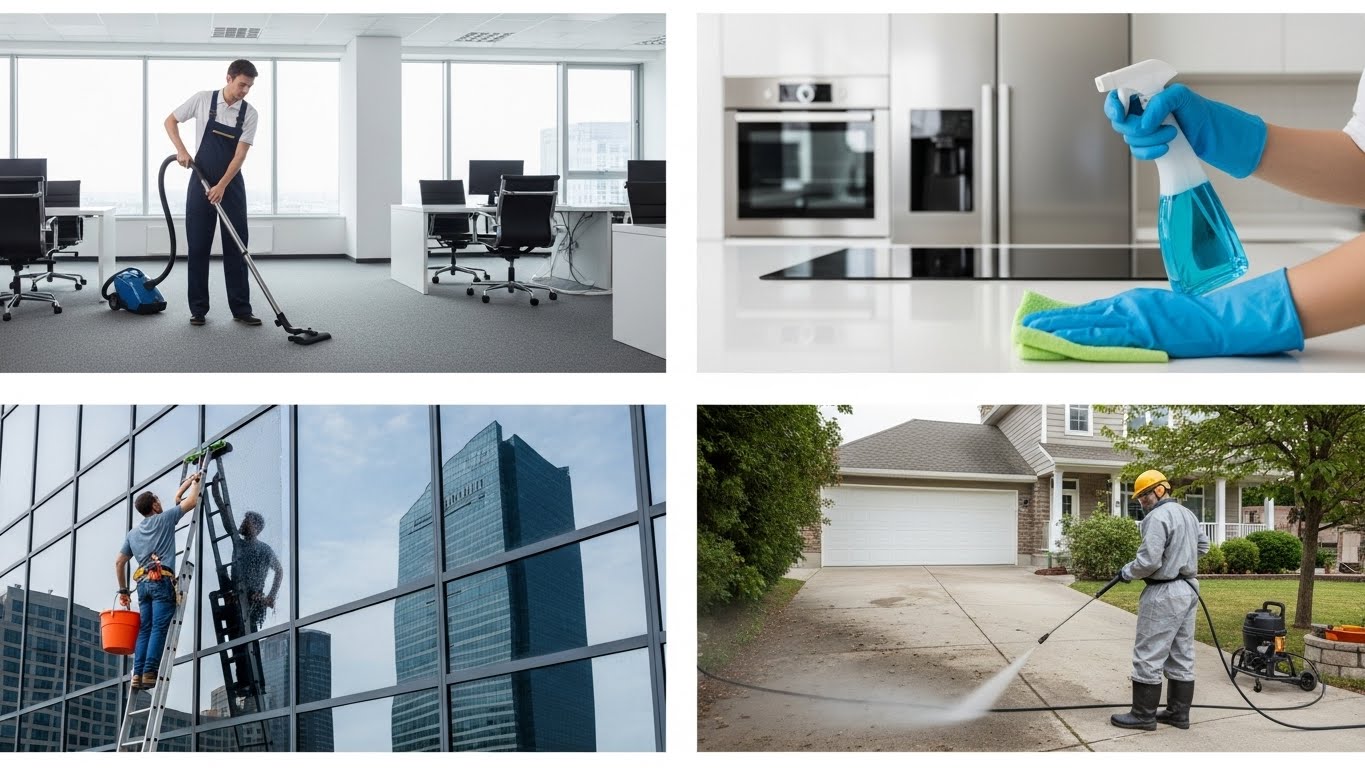
- Window cleaning
- Trash collection and disposal
Who Provides It?
- Professional commercial cleaning companies
- Contracted cleaning teams or facility service providers
Why it matters: Clean commercial spaces are not just about appearances, they help reduce the spread of germs, maintain air quality, and create a safe environment for employees and visitors.
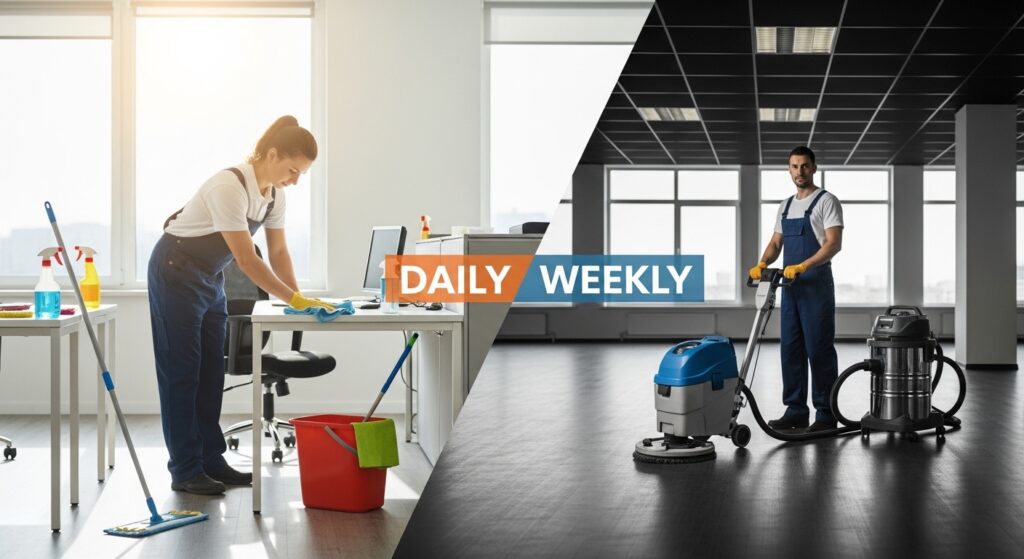
Example: A mid-sized office may require daily desk sanitization, weekly carpet cleaning, and monthly deep-cleaning of communal areas.
Tip: In simple terms, if your business has multiple employees or clients visiting regularly, you likely need commercial cleaning.
What is Industrial Cleaning?
Industrial cleaning refers to specialized cleaning services designed for factories, warehouses, manufacturing plants, power stations, and other industrial environments. It focuses on removing heavy dirt, grease, chemicals, and hazardous materials while maintaining safety, operational efficiency, and regulatory compliance.
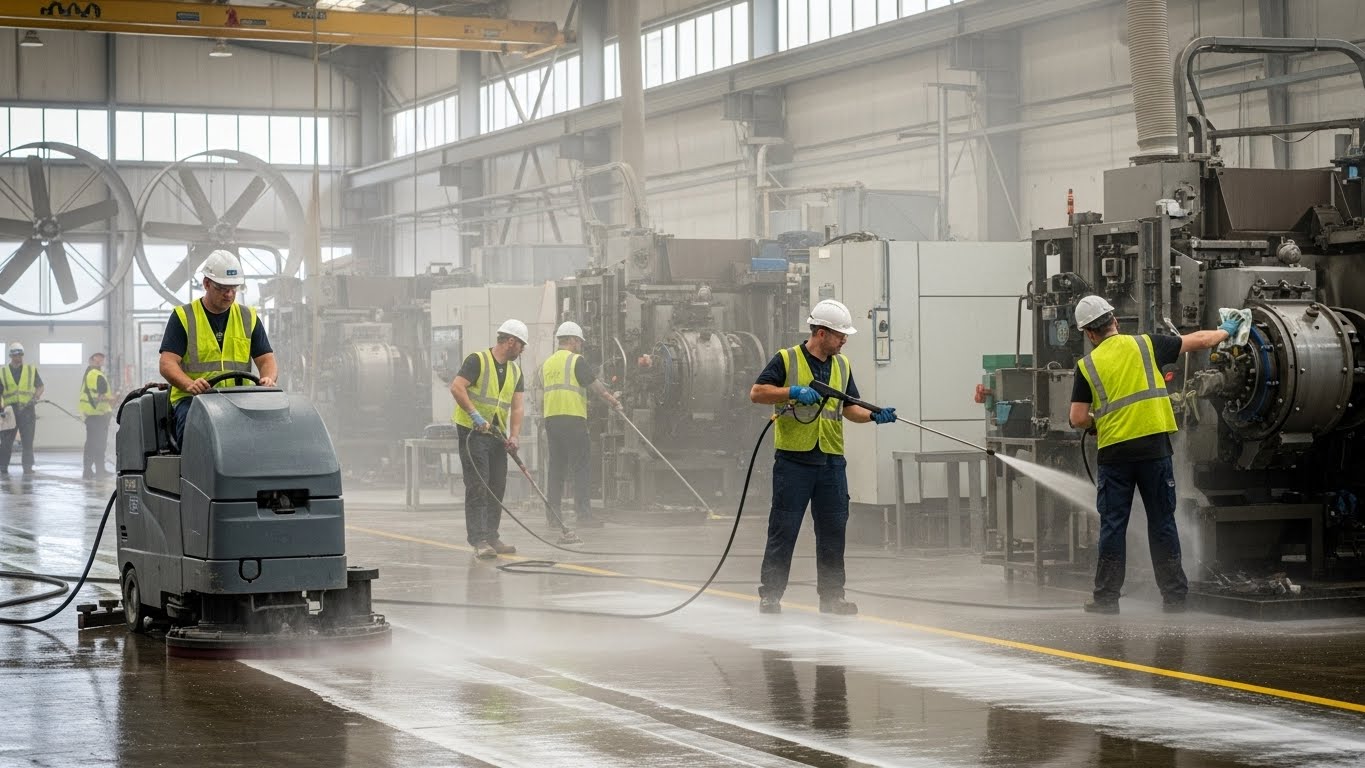
Key Aspects
- Scope: Large-scale industrial sites with machinery and hazardous substances.
- Services: Equipment cleaning, degreasing, waste removal, contamination control.
- Clients: Manufacturing plants, warehouses, refineries, production facilities.
- Methods: Heavy-duty equipment, PPE, chemical handling protocols.
- Benefits: Workplace safety, reduced downtime, regulatory compliance.
Tasks include:
- Cleaning and degreasing heavy machinery
- Removing chemical residues
- Industrial floor care (oil and grease removal)
- Dust and debris management in large facilities
Who Provides It?
- Specialized industrial cleaning companies
- Certified industrial cleaning contractors
Safety considerations: Industrial cleaning staff must follow OSHA or equivalent safety regulations, wear personal protective equipment (PPE), and use specialized equipment.
Example: In a food production factory, industrial cleaners are responsible for sanitizing equipment to prevent contamination while ensuring production lines remain operational.
What is an Industrial Cleaner?
An industrial cleaner is a trained professional who specializes in cleaning industrial facilities safely and efficiently. Unlike standard cleaners, industrial cleaners work around machinery, chemicals, and hazardous materials and follow strict safety and operational guidelines.
Key Aspects
- Role: Safety-focused cleaning in industrial environments.
- Skills: Chemical handling, equipment knowledge, safety compliance.
- Training: OSHA or equivalent safety and hazard training.
- Responsibility: Prevent contamination, accidents, and equipment damage.
Common Tasks
- Cleaning production machinery
- Handling hazardous waste safely
- Degreasing industrial surfaces
- Using protective gear and specialized tools
Who Employs Them?
- Industrial cleaning companies
- Manufacturing and industrial facilities
Key point: Industrial cleaners combine technical knowledge with cleaning expertise, making them indispensable in industrial settings.
What is Janitorial Services?
Janitorial services are ongoing, routine cleaning and maintenance services for commercial and public buildings. The focus is on daily or scheduled upkeep to keep facilities clean, functional, and presentable.
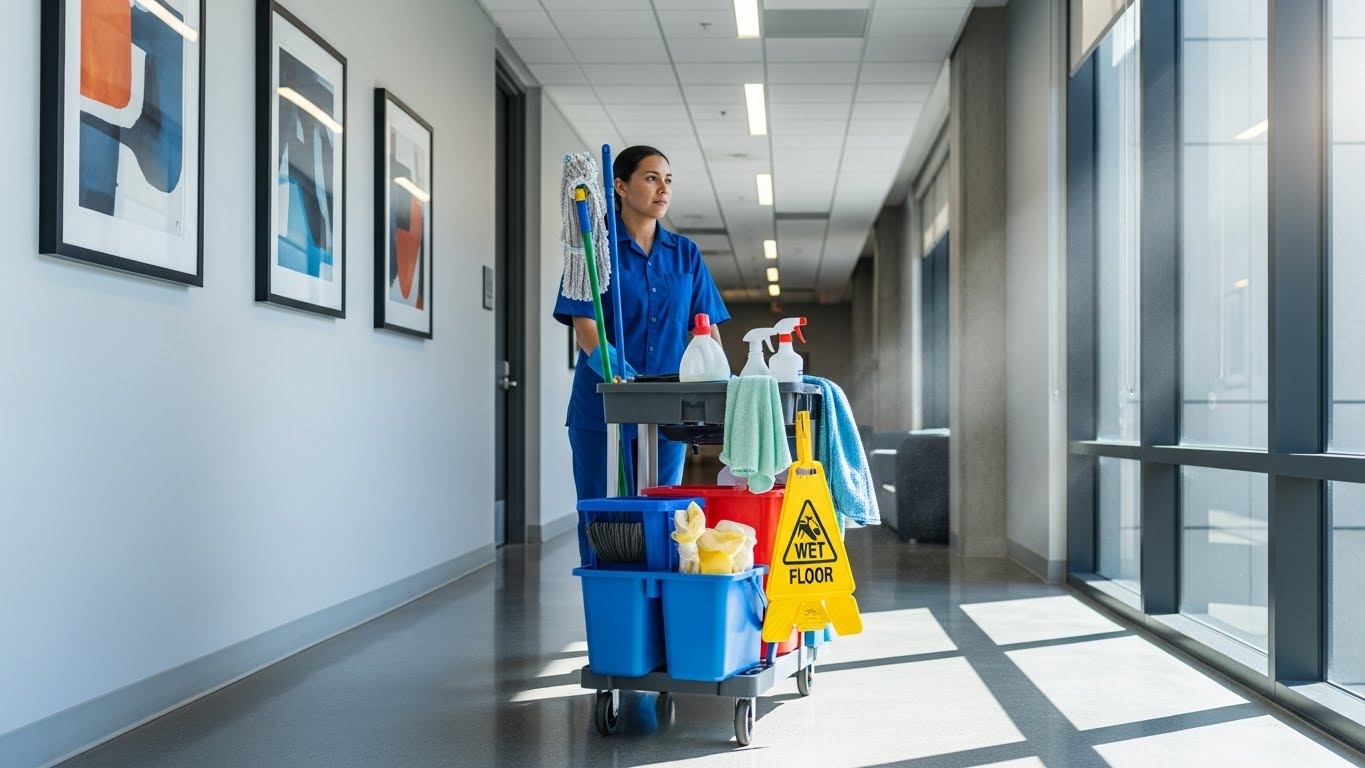
Key Aspects
- Scope: Day-to-day maintenance rather than deep or specialized cleaning.
- Services: Cleaning, restocking, basic facility upkeep.
- Clients: Offices, schools, hospitals, apartment complexes.
- Methods: Standard cleaning tools and schedules.
- Benefits: Consistent cleanliness, hygiene, and usability.
Tasks include:
- Trash removal and recycling
- Restroom sanitation and restocking
- Sweeping, mopping, and vacuuming floors
- Dusting surfaces and general upkeep
Who Provides It?
- Janitorial companies
- In-house janitorial staff
Example: Schools, hospitals, and office buildings often employ janitorial services to maintain hygiene and ensure compliance with health standards.
Pro tip: In simple terms, janitorial services are like the backbone of daily cleaning for commercial spaces.
What is Commercial Housekeeping?
Commercial housekeeping is a comprehensive cleaning and maintenance service that combines routine cleaning with organization and presentation management in commercial environments, especially hospitality and corporate settings.
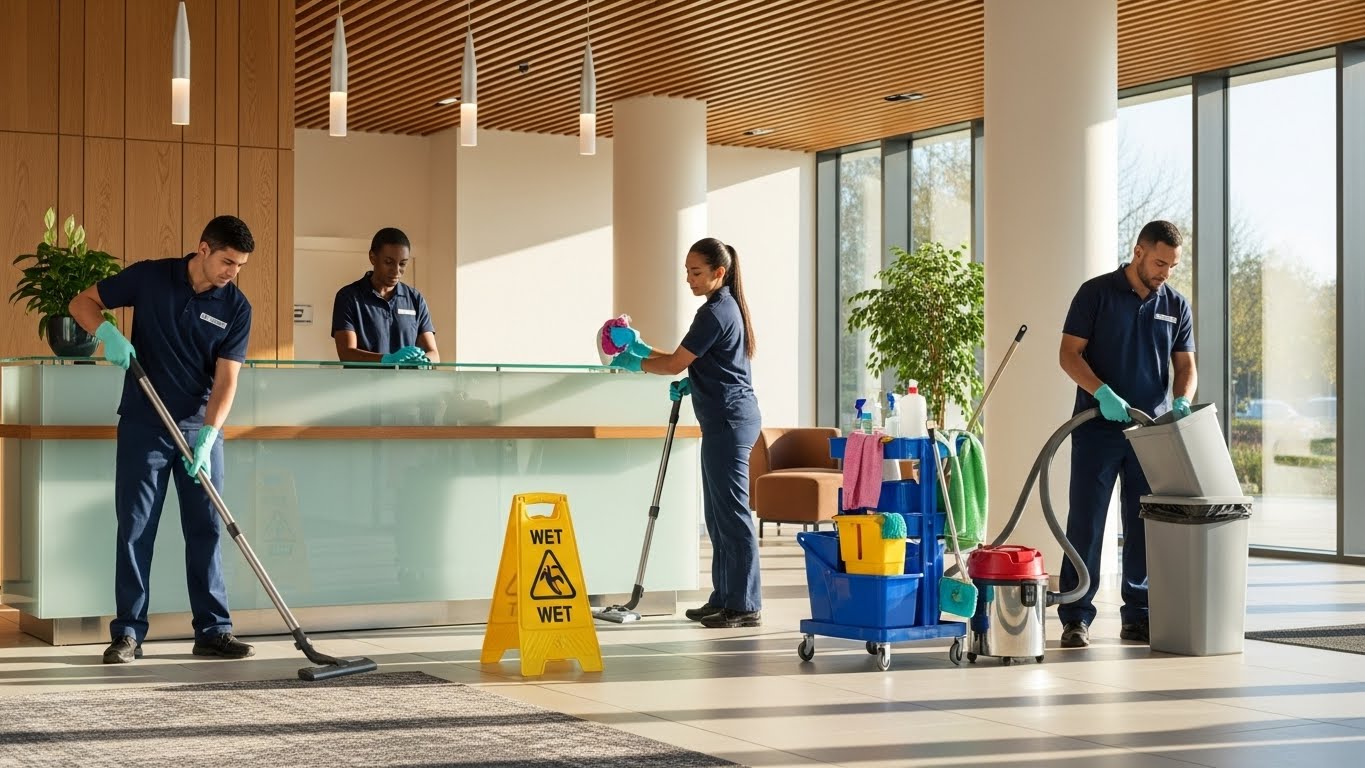
Key Aspects
- Scope: More detailed and appearance-focused than janitorial services.
- Services: Cleaning, organizing, and maintaining spaces.
- Clients: Hotels, resorts, corporate offices, conference centers.
- Methods: Scheduled cleaning with attention to detail.
- Benefits: Enhanced guest or client experience, professional presentation.
Common Tasks
- Deep cleaning rooms and common areas
- Carpet and upholstery care
- Linen and supply management
- Organizing storage and service areas
Who Provides It?
- Commercial housekeeping companies
- In-house hospitality housekeeping teams
Example: Hotels, resorts, and corporate offices use commercial housekeeping to maintain a polished environment for clients and staff.
Tip: Commercial housekeeping is ideal for businesses that need both cleanliness and organization, ensuring a complete, professional environment.
What Does Commercial Cleaning Mean?
Commercial cleaning means the professional cleaning and maintenance of business and public spaces to meet hygiene, safety, and appearance standards. It includes both routine cleaning and specialized services tailored to commercial environments.
Key Aspects
- Purpose: Maintain clean, safe, and professional spaces.
- Scope: Offices, institutions, retail, and shared facilities.
- Standards: Health, sanitation, and compliance-driven.
- Outcome: A functional, welcoming environment.
Common Examples
- Office cleaning after business hours
- Retail store sanitation
- School and healthcare facility cleaning
Who Uses It?
- Businesses of all sizes
- Public and private institutions
In simple terms: Commercial cleaning keeps workplaces, schools, hotels, and other facilities safe, presentable, and productive.
Example: A law firm may schedule nightly commercial cleaning to sanitize high-touch areas and weekly deep-cleaning for carpets and windows.
What is a Janitorial?
Janitorial refers to the role, service, or function related to routine cleaning and maintenance of buildings. A janitorial role focuses on keeping facilities operational and clean on a daily basis.
Key Aspects
- Role: Maintenance-focused cleaning.
- Scope: Interior spaces and basic upkeep.
- Frequency: Daily or scheduled routines.
- Environment: Commercial or public buildings.
Common Tasks
- Floor cleaning
- Restroom maintenance
- Trash handling
- Supply replenishment
Who Performs It?
- Janitors or custodial staff
- Janitorial service providers
Difference from maid services: Janitorial work focuses on public or commercial spaces, while maid services are residential.
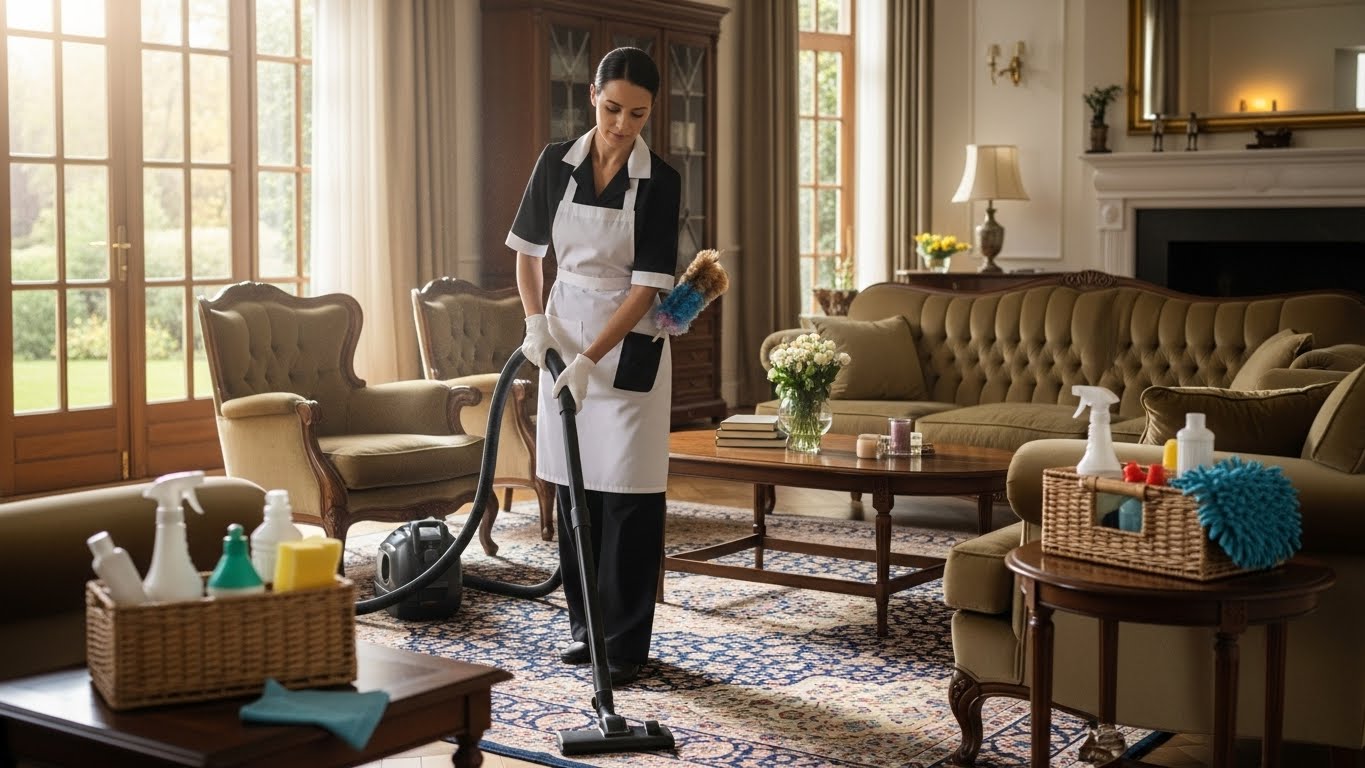
What Does a Maid Service Do?
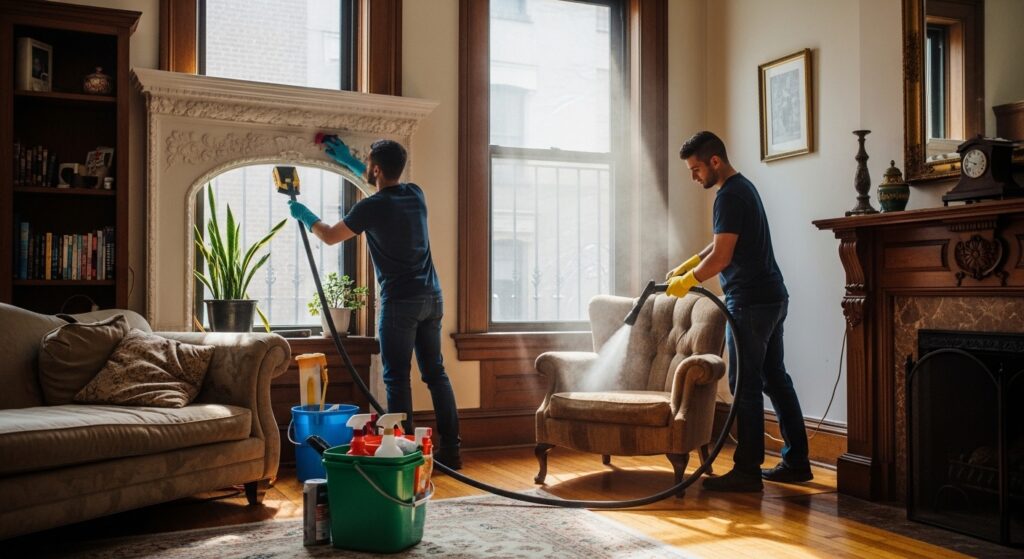
A maid service provides residential cleaning services focused on private homes and living spaces. Unlike commercial or janitorial cleaning, maid services are tailored to personal household needs.
Key Aspects
- Scope: Residential homes and apartments.
- Services: Cleaning, tidying, and sometimes organizing.
- Clients: Homeowners, renters, families.
- Methods: Household cleaning tools and schedules.
- Benefits: Convenience, cleanliness, and time savings.
Common Tasks
- Kitchen and bathroom cleaning
- Dusting furniture and surfaces
- Vacuuming and mopping floors
- Laundry and bed-making (optional)
Who Provides It?
- Residential cleaning companies
- Independent or agency-employed maids
Key difference: Maid services are tailored for personal living spaces, not industrial or commercial settings.
Tip: Most people ask whether maid services are enough for commercial spaces, they are not. For offices or factories, professional cleaning services are necessary.
Comparison of Cleaning Services
| Service Type | Location | Tasks | Frequency | Skills Required | Equipment |
|---|---|---|---|---|---|
| Commercial Cleaning | Offices, schools, shops | Dusting, mopping, sanitation | Daily, weekly | Moderate | Vacuum, microfiber cloths, disinfectants |
| Industrial Cleaning | Factories, warehouses | Machinery cleaning, chemical handling | Scheduled/deep | High, safety training | PPE, industrial floor scrubbers |
| Janitorial Services | Offices, hospitals, schools | Trash removal, floor care, restrooms | Daily or ongoing | Basic to moderate | Mop, broom, cleaning solutions |
| Commercial Housekeeping | Hotels, corporate offices | Deep cleaning, organization, minor repairs | Daily/weekly | Moderate | Carpet cleaners, cleaning chemicals |
| Maid Service | Homes, apartments | Dusting, laundry, general cleaning | Weekly/bi-weekly | Basic | Vacuum, mop, standard cleaning supplies |
Step-by-Step Process: How Commercial Cleaning Works
- Assessment: Evaluate facility size, cleaning requirements, and scheduling needs.
- Planning: Create a customized cleaning schedule and checklist.
- Execution: Cleaning team performs tasks using the appropriate equipment and methods.
- Inspection: Supervisor or manager verifies quality standards.
- Follow-up: Adjust schedule or scope as needed based on feedback.
Timeline Snapshot Example:
- Day 1: Initial deep cleaning and setup
- Days 2–7: Daily janitorial tasks and routine maintenance
- Week 2: Follow-up inspection and adjustments
Trends in Cleaning Services
- Eco-friendly cleaning: Use of sustainable, non-toxic cleaning products.
- Automation: Robot vacuums and floor scrubbers reduce manual labor.
- Outsourcing: Many companies outsource cleaning to certified providers rather than using in-house teams.
- Smart cleaning: Sensor-based systems and AI tools optimize cleaning schedules and detect high-traffic areas.
Who Benefits Most and Who It’s Not For
Who benefits most:
- Businesses with high traffic areas or public interaction
- Industrial facilities requiring safety-compliant cleaning
- Homeowners seeking professional maid services
When it may not be ideal:
- Small offices with minimal cleaning needs
- Homes with light, infrequent cleaning needs that can be handled personally
People Also Ask
Q: What is commercial cleaning?
A: Professional cleaning for offices, schools, and businesses to maintain hygiene and appearance.
Q: What is industrial cleaning?
A: Cleaning of factories or warehouses using specialized equipment and trained staff.
Q: What is an industrial cleaner?
A: A professional trained to clean industrial spaces safely, including machinery and chemical areas.
Q: What is janitorial services?
A: Ongoing maintenance cleaning for commercial spaces, like offices and schools.
Q: What is commercial housekeeping?
A: Cleaning, organizing, and minor maintenance in commercial buildings like hotels and offices.
Q: What does commercial cleaning mean?
A: The professional cleaning of commercial spaces to ensure safety, hygiene, and appearance.
Q: What does a maid service do?
A: Cleans residential homes, including dusting, vacuuming, laundry, and general tidying.
Conclusion
Professional cleaning services go far beyond mere tidying. From commercial cleaning to industrial cleaning, and from janitorial services to maid services, each type of cleaning serves a specific purpose. Choosing the right service helps ensure safety, hygiene, productivity, and long-term peace of mind for both residential and commercial spaces.
Understanding these differences allows you to invest wisely in a cleaning solution that truly fits your needs. Whether you’re managing an industrial facility, operating an office, or maintaining a home, professional cleaning supports healthier environments, extends the life of equipment and surfaces, and keeps spaces both visually and functionally appealing.
At Greencap Cleaning, we apply this understanding every day by delivering reliable, professional cleaning services across Brooklyn and New York City. Our approach focuses on proper methods, trained staff, and attention to detail, ensuring each space is cleaned according to its unique requirements, not a one-size-fits-all checklist.
In short, clean spaces are more than appearances, they are investments in safety, efficiency, and well-being. With the clarity provided in this guide and the support of an experienced local provider like Greencap Cleaning, choosing the right cleaning service becomes a confident, informed decision.