
Medical Office and Outpatient Clinic Cleaning in Brooklyn
Outpatient cleaning with the contact times, the room sequence and the scope boundary written down before the first shift.
A medical office gets judged on cleanliness before a patient ever meets the clinician, and the standard in an outpatient suite is not the standard in an office floor. An exam room, a treatment chair, a waiting room and a staff restroom each carry a different contamination risk, so the product, the sequence and the contact time have to change room by room. Greencap Cleaning cleans commercial and healthcare space across Brooklyn and all five boroughs. This page sets out what an outpatient scope covers, what it deliberately does not cover, and the point where a permitted medical waste hauler takes over.
Healthier, more professional workspaces through dependable recurring cleaning.
A clean office supports healthier employees, sharper first impressions, and fewer sick days. Greencap Cleaning provides dependable office cleaning for NYC workplaces, from single suites to full corporate floors, focused on the desks, restrooms, and shared spaces your team touches every day. Our insured crews handle disinfection of high-touch surfaces, restroom sanitizing, floor care, and trash removal on a schedule that fits your workday. We clean days, evenings, or after hours so your team walks into a fresh space each morning. Offices often pair recurring cleaning with periodic carpet and upholstery cleaning or deep cleaning, all managed by one team.
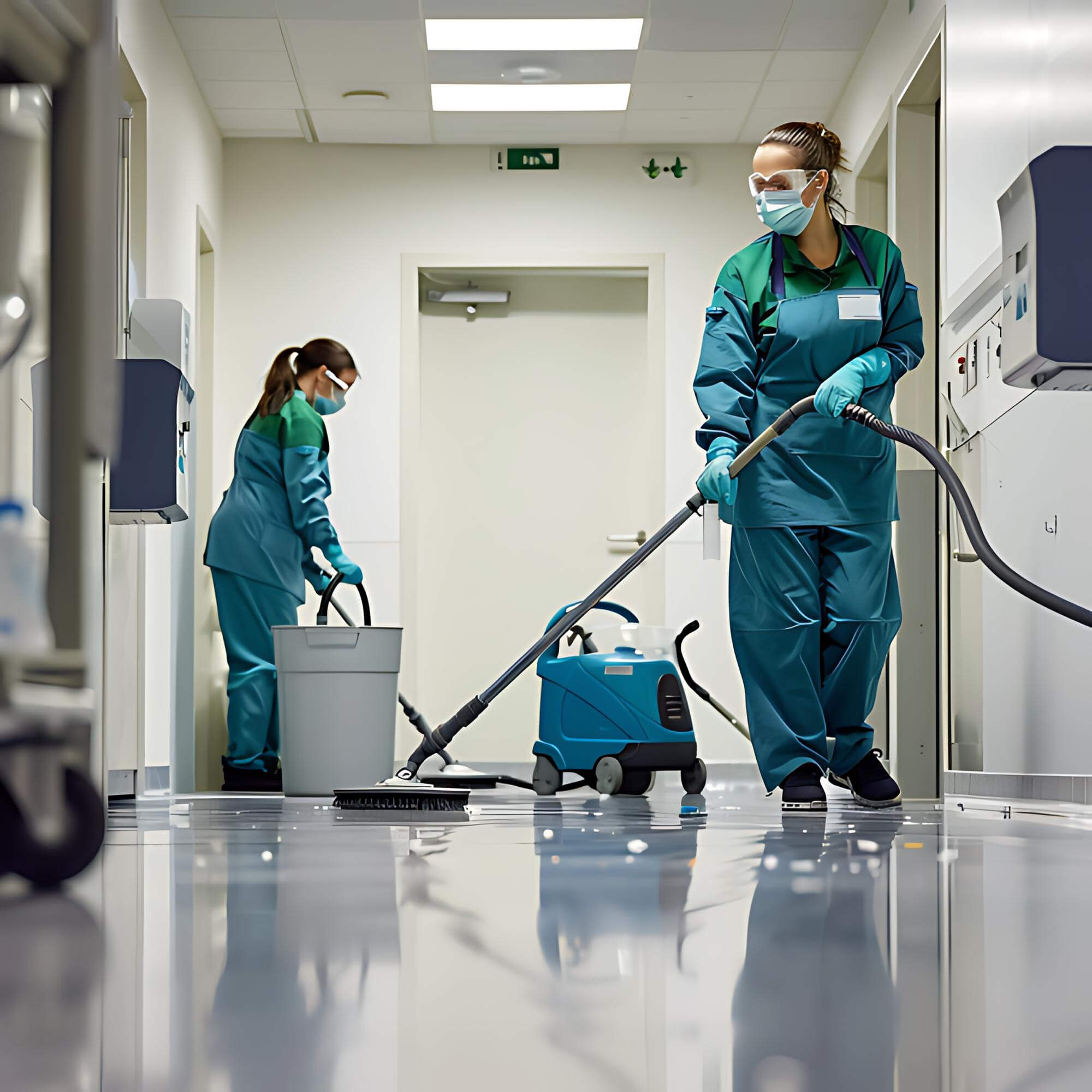
What's Include
Clinical rooms
- Exam room terminal cleaning: Top-down clean of the full room after the last patient: table, stirrups, stools, cabinetry fronts, light handles, waste bins and floor.
- High-touch disinfection with a stated contact time: Door handles, light switches, bed rails, chair arms and counter edges disinfected with an EPA-registered product left wet for the dwell time printed on its label, not wiped dry on contact.
- Procedure and treatment room turnover: Between-case reset for ambulatory surgery and procedure rooms, scheduled to your case list rather than to a nightly clock.
- Dental operatory surfaces: Chair, delivery unit exterior, light handles, tray table and cuspidor surround. Instrument reprocessing and sterilisation stay with your clinical staff.
- Imaging and radiology suites: Floors, positioning surfaces, control area and patient changing space. We do not clean the imaging hardware itself.
- Rehab and physical therapy areas: Plinths, mats, bolsters, parallel bars and shared equipment wiped down between sessions or at end of day, whichever your schedule calls for.
Patient-facing areas
- Waiting room high-touch cycles: Chair arms, side tables, pens, clipboards, water station and door hardware serviced more than once a day in high-volume practices.
- Reception and check-in kiosks: Counter, glass, card readers and self-check-in screens cleaned with a screen-safe product that will not haze the panel.
- Soft surfaces and the toy question: Upholstered seating, fabric partitions and paediatric play items handled on a stated protocol, because this is the thing parents notice and nobody else on the SERP mentions.
- Patient restrooms: Serviced separately from staff restrooms, with separate tools, and restocked to a par level you set.
Back of house and floors
- Staff break rooms and restrooms: Cleaned on the non-clinical tool set so nothing crosses back into a clinical room.
- Administrative offices and corridors: Desks cleared to your privacy rule, trash, glass, and corridor floors.
- Floor care by substrate: Sheet vinyl and VCT scrubbed or stripped and refinished on a periodic schedule, carpet tile in admin areas extracted separately.
- Colour-coded microfiber, two zones: One colour set never leaves the clinical zone and one never enters it, so a cloth used on a restroom cannot reach an exam table.
Waste, spills and boundaries
- Sharps and red-bag container exteriors: We wipe and service the outside of containers and keep the area around them clean. We do not open, empty or transport them.
- Bloodborne pathogen spill response: A written response for a blood or body-fluid spill in a common area, run by crew trained to 29 CFR 1910.1030.
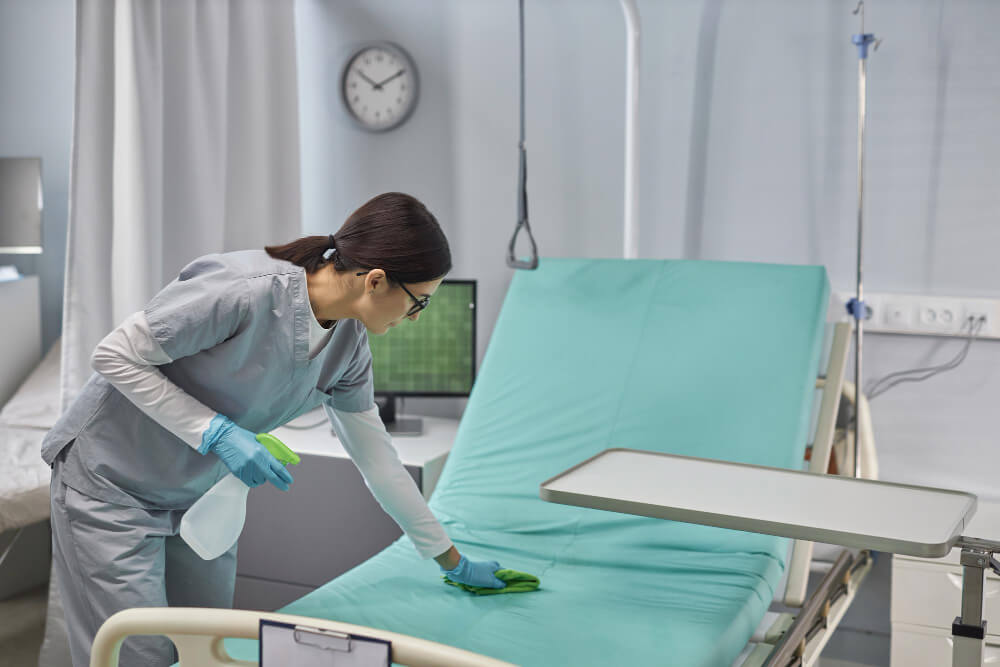

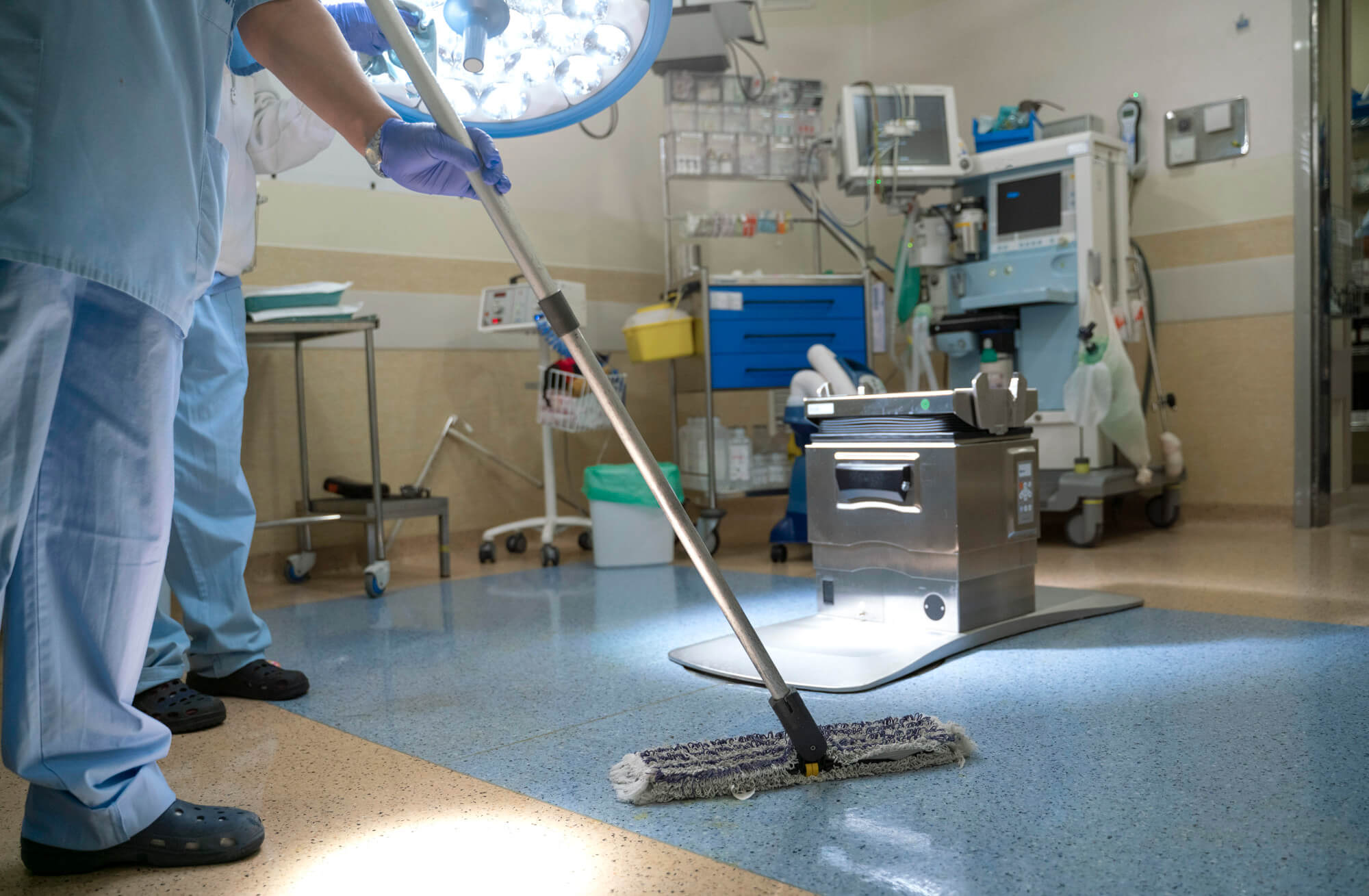

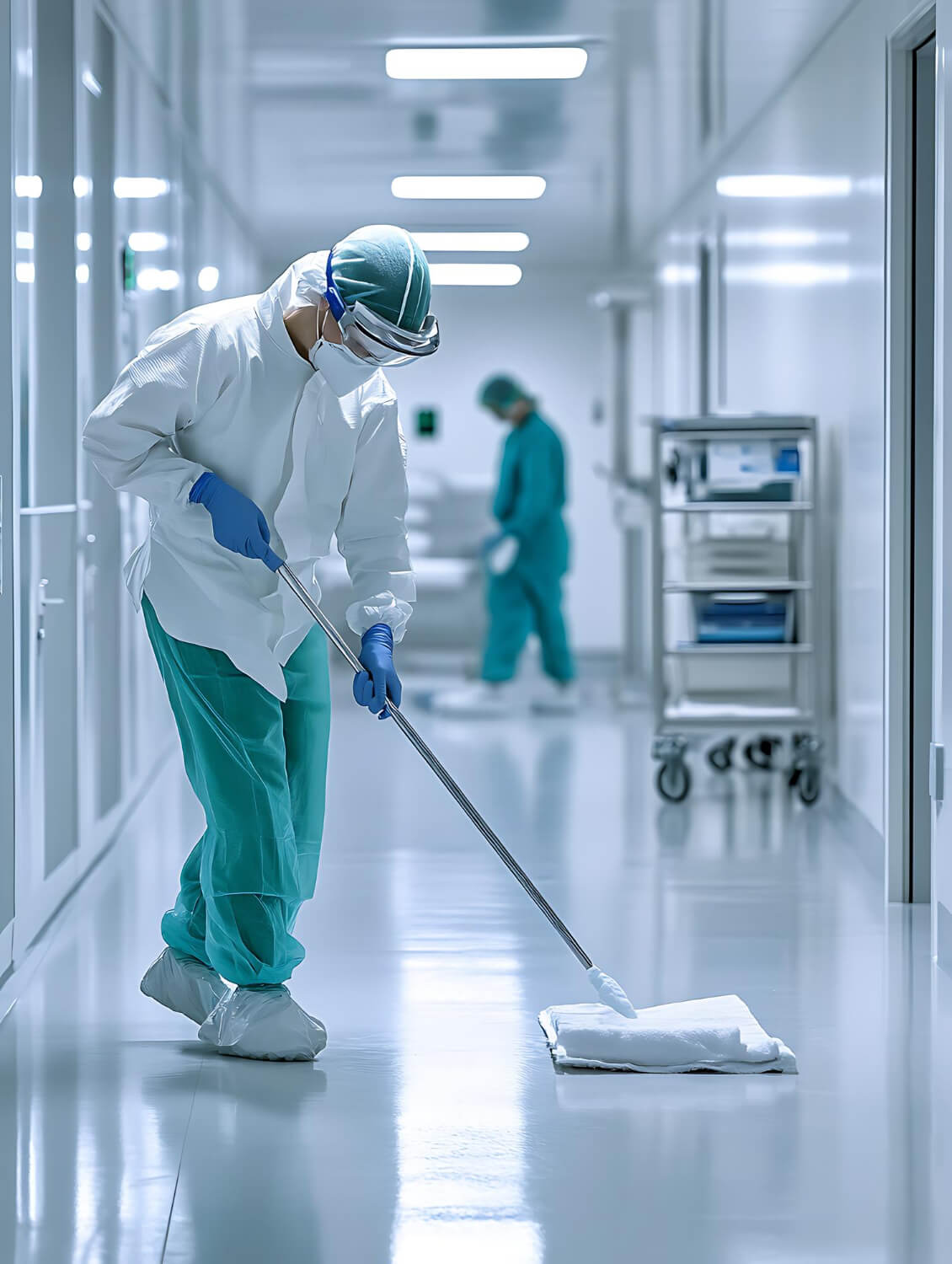
Where Our Scope Ends, and Why We Put It in Writing
Every page ranking for medical office cleaning in Brooklyn tells you what it will clean. Not one of them tells you what it will not. That is the wrong way round, because the question a practice administrator actually loses sleep over is the hand-off: who is responsible for the sharps container, who is responsible for the imaging hardware, and what happens when a surveyor asks.
So we write the exclusions into the scope document alongside the inclusions. Our crew services the exterior of sharps and red-bag containers and keeps the storage area clean. Our crew does not open, seal, move or transport regulated medical waste. In New York State, transporting regulated medical waste requires a NYSDEC Part 364 permit or registration, and that work belongs to your permitted hauler on their schedule, not to a janitorial contractor on ours.
The same boundary logic applies elsewhere. We clean the surfaces around imaging equipment, not the equipment. We clean the operatory, not the instruments. We clean the lab’s floors, sinks and waste, not the bench.
One more clarification worth making, because two competitors on this SERP get it wrong. There is no such thing as a HIPAA-certified or OSHA-certified cleaning company. HHS certifies no vendor as HIPAA compliant, and OSHA does not certify companies at all, it sets standards and enforces them. What a cleaning contractor can honestly offer is a confidentiality policy, staff trained not to read or move charts, and compliance with the standard that genuinely applies to us: the OSHA Bloodborne Pathogens standard, 29 CFR 1910.1030.
Why Greencap Cleaning
Contact time is in the scope, not assumed
Disinfection only works if the surface stays wet for the time on the product label. We name the product and the dwell time per surface type in the scope document so it can be audited rather than trusted.
Two tool sets, one building
Clinical and non-clinical areas run on separate colour-coded microfiber and separate mop heads. A restroom cloth physically cannot reach an exam table.
Crews trained to the standard that actually applies
Staff assigned to clinical space work under a written exposure control plan and Bloodborne Pathogens training, not a badge that does not exist
A Brooklyn crew that can start before you open
Our base is on 63rd Street in Brooklyn, so pre-open and post-close windows across the borough do not need a travel premium to be workable.
Call (718) 687-4294 or request a walkthrough with Greencap Cleaning.
(718) 687 4294
How We Work
We walk the suite room by room and tier it: clinical, patient-facing, and administrative. Nothing gets priced until every room sits in a tier, because the tier decides the product and the frequency.
We match an EPA-registered disinfectant to each tier and record the label contact time. Where a surface cannot tolerate that product, for example a touchscreen, we name the alternative in the same document.
You receive one document that lists what we do and, in the same length of detail, what we do not: regulated medical waste transport, instrument reprocessing, imaging hardware, lab benches.
Soil comes off before disinfectant goes on, because a disinfectant applied to a soiled surface is doing neither job. The crew works top down and clean to dirty, finishing at the restrooms.
The supervisor checks a rotating sample of rooms and logs anything the crew could not complete, for example a room still occupied at shift start, so it is visible to you rather than absorbed silently.
What Outpatient Cleaning Looks Like in Brooklyn
Brooklyn outpatient space is mostly not purpose-built. A large share of the borough’s practices sit in converted ground-floor retail, in brownstone garden levels, and in mixed-use buildings where the medical suite shares a lobby, a service elevator and a trash room with residential tenants. That changes the job in three practical ways.
First, waste staging is constrained. A suite in a mixed-use building often has no dedicated soiled utility room, which makes the storage location of regulated waste containers a real planning question rather than a diagram detail. Second, access windows are tight: buildings with residential tenants restrict service-elevator hours, so a pre-open clean can be the only workable slot. Third, floor substrates are inconsistent, because a converted space frequently runs sheet vinyl in the clinical rooms and original hardwood or carpet tile in the front, and a single floor programme will damage one of them.
We scope for the building you are actually in, not the diagram of a medical office park.
Who We Help
This page is written for the person who signs the cleaning contract at an outpatient practice: the practice administrator, the office manager, or the physician-owner of a small group. If your building is a hospital or a large multi-department facility, our hospital and medical facility page is the better fit.
Primary care and multi-specialty group practices
Multiple exam rooms, a shared waiting room, and a nightly turnover window that has to finish before the first appointment.
Dental and orthodontic practices
Operatory surfaces, a sterilisation area we clean around rather than into, and high patient throughput.
Urgent care clinics
Extended hours, walk-in volume, and a waiting room that needs servicing during the day rather than only at night.
Imaging and diagnostic centres
Equipment-adjacent cleaning with a clear no-touch line on the hardware itself.
Physical therapy and rehabilitation clinics
Mats, plinths and shared equipment, plus a gym-style floor that takes heavy daily traffic.
Dialysis and ambulatory surgery centres
Between-case turnover on your schedule, and a documented protocol you can show a surveyor.
Serving All Five Boroughs
We clean outpatient space across all five boroughs. Practices in Manhattan, Brooklyn, Queens, the Bronx and Staten Island are all served from the same Brooklyn base, with the shift window set by your building’s access rules rather than by our travel time.
Frequently Asked Questions (FAQs)
What is terminal cleaning in an outpatient office?
In a hospital, terminal cleaning means the full top-to-bottom clean of a room after a patient is discharged or transferred. In an outpatient setting the equivalent is the end-of-day clean of each clinical room after the last patient: every horizontal surface, all high-touch points, the exam furniture, the waste bins and the floor, done in a clean-to-dirty sequence rather than a quick wipe-round. It is a different job from the between-patient wipe-down your clinical staff perform during the day, and both are needed.
Do you use hospital-grade disinfectants?
We use EPA-registered disinfectants selected for the surface and the risk tier of the room. The phrase that matters more than the grade is the contact time: an EPA-registered product only performs to its label claim if the surface stays visibly wet for the full dwell time, which for many products is several minutes and not the few seconds a wipe-and-dry pass gives it. We record the product and its dwell time per surface type in your scope document so you can check the claim rather than take it on faith.
Are you HIPAA certified?
No, and neither is anyone else. There is no HIPAA certification for vendors: the Department of Health and Human Services does not certify any company as HIPAA compliant, so a cleaning contractor advertising it is selling something that does not exist. What we do provide is a confidentiality policy, staff instructed never to read, photograph or move patient records, and a willingness to sign whatever business associate agreement your counsel decides is appropriate for your arrangement. Whether routine janitorial work makes a vendor a business associate is a fact-specific question for your practice to determine.
Do you handle our regulated medical waste?
No. We service the exterior of sharps and red-bag containers and keep the storage area clean, and we replace container liners where your protocol allows it, but we do not open, seal, move or transport regulated medical waste. Transporting regulated medical waste in New York State requires a NYSDEC Part 364 permit or registration, which is your licensed hauler’s function. Keeping that line clear protects both of us, and we write it into the scope document rather than leaving it to be discovered.
Can you clean around our patient schedule?
Yes, and in most Brooklyn practices that is the only way it works. The common patterns are a pre-open clean finishing before the first appointment, a post-close clean starting after the last patient leaves, and for urgent care and higher-volume practices a mid-day porter pass that covers the waiting room, restrooms and reception while clinical rooms stay in use. Mixed-use buildings often restrict service-elevator hours, so we confirm your building’s access window before quoting a shift.
What do you do about the waiting room toys and soft seating?
We handle them on a stated protocol rather than pretending they are not there. Hard plastic play items are washable and get disinfected on a set frequency. Soft toys, fabric books and plush items cannot be disinfected reliably and we will tell you so rather than wipe them and call it done. Upholstered seating is vacuumed on every visit and extracted on a periodic cycle. If you want the play area simplified to items that can actually be cleaned, we will say which ones those are.
Will the same crew clean our restrooms and our exam rooms?
The same crew, never the same cloths or mop heads. We run a colour-coded microfiber system with a clinical set and a non-clinical set that are stored, laundered and carried separately, so an item used in a restroom physically cannot end up on an exam table. The crew also works in a fixed sequence, clean areas first and restrooms last, which is the second half of the same control.
How much does medical office cleaning cost in Brooklyn?
It is priced on square footage, the number of clinical rooms, and the frequency, because a four-room practice cleaned five nights a week and a twelve-room practice cleaned three nights a week are different jobs at similar square footage. Published NYC benchmarks for medical space run roughly 0.18 to 0.35 US dollars per square foot per visit, above the 0.10 to 0.25 range for routine office space, and those are figures published by market participants rather than audited rates. We quote after a walkthrough because the room count and the substrate mix move the number more than the square footage does.
Get Started
Greencap Cleaning serves commercial and institutional clients across all five boroughs from a base in Brooklyn. Call (718) 687-4294 or request a walkthrough to talk about medical office cleaning. We will tell you what the job actually involves, including the parts that are not ours to do.
(718) 687 4294