A clean apartment building comes down to a written schedule: lobby, elevators, hallways and trash rooms every day, stairwells and laundry rooms every week, and floors, windows and the exterior on a monthly and seasonal cycle. New York City law makes the owner responsible for keeping every shared space clean and sanitary, and it does not care whether that work is done by a live-in super, a porter or an outside crew.
A lobby may look clean at 9 a.m. and show tracked-in dirt, full bins and fingerprints by the afternoon. For boards and property managers, the challenge is defining what gets cleaned, how often, and who checks the result. This checklist is the one we build co-op and condo building cleaning programs around, adapted for any size of NYC multifamily building.
What NYC Law Requires Before Any Checklist
Three rules set the floor for every apartment building in the five boroughs. None of them tells you how often to mop, but all of them decide who is liable when the job is not done.
- Shared spaces must stay clean and sanitary. Section 27-2011 of the NYC Housing Maintenance Code puts the duty to keep the public parts of a dwelling clean on the owner. The board and managing agent should clarify who carries out and supervises that duty.
- Buildings with nine or more units need janitorial service around the clock. Section 27-2053 requires owners of multiple dwellings with nine or more units to provide janitorial service on a 24-hour basis and to post the janitor’s name, address and phone number in a conspicuous spot, updated within five days of any change.
- The sidewalk and 18 inches of gutter are yours too. Under Administrative Code section 16-118, the frontage in front of the building has to be kept clean, and sweeping debris into the street does not count. Our guide to NYC sidewalk cleaning rules covers the inspection windows in detail.
The practical takeaway: the law describes an outcome, not a schedule. The schedule is the board’s job, and a written one is the best evidence you have that the outcome is being met.
The Daily Common Area Cleaning Checklist
Need help covering these tasks? Request a building walkthrough and ask for a room-by-room scope for your lobby, elevators, hallways and trash areas.
Daily work is about the spaces every resident passes through. The time required depends on the building, staffing, traffic and number of shared spaces. A morning pass plus targeted checks later in the day may help busy buildings.
1. Lobby and entrance
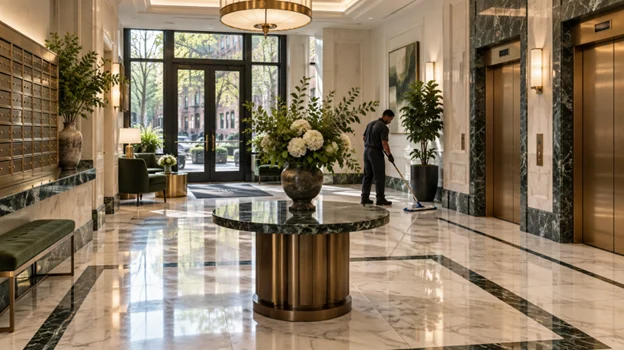
- Sweep and damp mop the lobby floor, then spot clean the entrance mats.
- Clean entry door glass, push plates and the intercom panel.
- Dust and wipe the mailroom counter and package area, and clear packaging debris.
- Empty lobby waste baskets and replace liners.
2. Elevators
- Wipe and disinfect call buttons, cab panels and handrails.
- Vacuum or damp mop the cab floor and clean the door tracks, where grit collects and causes wear.
- Polish stainless steel with the grain, not in circles.
3. Hallways and stairwells
- Walk every hallway floor and spot clean spills, scuffs and tracked-in dirt.
- Disinfect stair handrails and hallway door handles.
- Check that stairwells are clear of stored items, which is a fire safety issue as well as a cleaning one.
4. Trash, recycling and compost rooms
- Empty and wipe down compactor chute rooms on every floor.
- Sweep and mop the main trash room and clean around bins, including the floor under them.
- Separate trash, recycling and food scraps before set-out.
- Look for leaks, odors and any sign of pests, and report them the same day.
Weekly, Monthly and Seasonal Tasks
Everything below the daily line is where buildings fall behind. A simple frequency table, posted in the super’s office and shared with the board, keeps it visible.
| Frequency | Area | Tasks |
———————— | —————————————————————————– |
| Weekly | Stairwells | Sweep and mop every flight, dust railings and landings, clean stair doors. |
| Weekly | Laundry room | Wipe machines, clean lint areas around dryers, mop the floor, empty bins. |
| Weekly | Gym, lounge, roof deck | Disinfect equipment and furniture, vacuum, clean glass. |
| Weekly | Trash room | Hose down or deep mop the floor, degrease bins, clean walls to splash height. |
| Monthly | Hallway carpets | Deep vacuum edges and spot extract traffic lanes. |
| Monthly | Light fixtures and vents | Dust fixtures, return grilles and high ledges. |
| Monthly | Compactor chute | Arrange chute cleaning and sanitizing by a qualified vendor. |
| Quarterly | Lobby floors | Machine scrub, then polish or recoat depending on the floor type. |
| Twice a year | Windows and carpets | Interior and exterior glass, plus hot water extraction of common area carpet. |
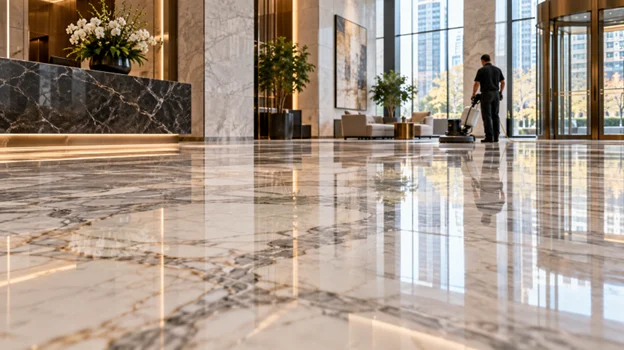
Floors are where the table varies most by building. Vinyl and VCT lobbies are scrubbed and recoated, while a stone lobby needs a different routine entirely. If yours is marble, read our guide to marble floor honing, polishing and crystallization before you approve a floor quote. For carpeted halls, carpet and upholstery cleaning on a twice-yearly cycle keeps traffic lanes from wearing through.
Trash Rooms and Set-Out: Keep the Scope Clear
Trash room care affects odors, pests, resident experience and the condition of waste before set-out. NYC’s containerization rules have changed several times since 2023, and fines for the newest rule began on September 8, 2026.
- Buildings with 1 to 9 units must set out trash in official NYC Bins. DSNY began issuing $50 summonses on September 8, 2026, and penalties rise for repeat violations within 12 months.
- Buildings with 10 to 30 units may choose between NYC Bins and Empire Bins, the large on-street containers DSNY is rolling out.
- Buildings with 31 or more units are moving to assigned Empire Bins district by district. DSNY has said larger buildings in Brooklyn Community District 2 (Downtown Brooklyn, DUMBO and Brooklyn Heights) receive them this fall.
- Food scraps and yard waste have been required to be separated from trash citywide since April 1, 2025.
Set-out timing matters as much as the container. Trash in a bin with a secure lid can generally go out after 6:00 PM the night before collection, while bags placed directly at the curb have a later window. Because the rules differ by building size and are still changing, confirm your building’s current requirements with DSNY before you rewrite the porter schedule. If you need bulk items or construction debris taken away, our garbage removal service handles that separately from routine set-out.
Get a cleaning scope your board can review. Greencap Cleaning sets up common area cleaning programs for co-ops, condos and rental buildings across all five boroughs, with a written scope your board can check against. Call (718) 687-4294 or request a free walkthrough.
Seasonal Work Most Checklists Leave Out
A checklist that looks the same in July and January is missing something. NYC buildings need three seasonal adjustments.
Fall: wash the exterior before November
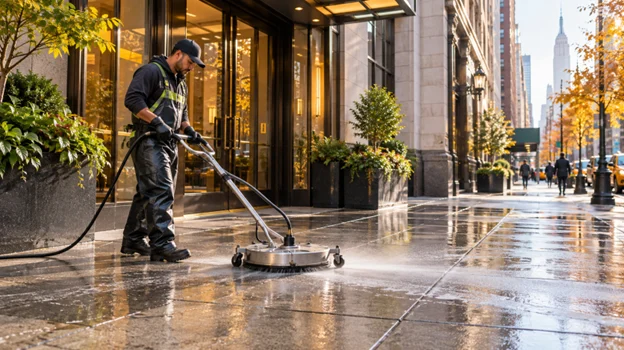
Leaf litter, gum and summer grime build up on entrance paving and the sidewalk. NYC water-use rules restrict flushing sidewalks with a hose from November 1 through the end of March, so the fall wash has to happen in October. Our guide on how often to pressure wash a commercial building covers timing by surface.
Winter: manage salt and slush at the door
Put down longer runs of entrance matting, add a midday lobby mop on storm days, and use a cleaner that lifts salt residue without dulling the floor. Walk-off mats and a clear snow plan protect both the lobby floor and the building’s liability.
Spring: reset the whole building
Spring is the time for exterior and interior window cleaning, carpet extraction, high dusting and a full trash room degrease. Many boards book this as a one-time deep cleaning on top of the regular contract.
Super, Porter or Cleaning Contractor: Who Does What
Most NYC buildings combine all three, and confusion over the boundaries is where tasks get dropped.
| Role | Typically handles | Typically does not handle |
———————————————————————————————————— | ——————————————————- |
| Super or resident janitor | Building systems, repairs, tenant calls, oversight of the staff and vendors, the 24-hour janitorial duty | Hours of routine cleaning in a larger building |
| Porter | Daily common area cleaning, trash and recycling, sidewalk sweeping, set-out | Licensed trade work of any kind |
| Cleaning contractor | Scheduled cleaning scope, floor care, carpets, windows, deep cleans, porter coverage | Pest control, mold remediation, elevator or boiler work |
| Licensed specialists | Pest control (DEC licensed), mold remediation where the law requires a licensed firm, chute and exhaust work | General cleaning |
Two boundaries matter more than the rest. Pest control has to be performed by a licensed applicator, and in buildings with 10 or more units, mold covering more than 10 square feet has to be handled by licensed mold professionals under the city’s indoor allergen rules. A cleaning crew should report both, not treat them. For buildings that want daytime coverage without a full-time hire, day porter and matron service fills the gap. Our post on day porter vs janitorial service explains how to choose.
How to Check That the Work Is Getting Done
A checklist only helps if someone can confirm it. Four habits make the difference:
- Put the scope in writing, by area and frequency, and attach it to the contract.
- Use sign-off sheets in the trash room and laundry room, dated and initialed each visit.
- Walk the building monthly with the super or the vendor’s supervisor and score each area.
- Track complaints by location, so a recurring problem in one stairwell points to a gap in the scope rather than a bad week.
Property managers running several buildings usually fold all of this into one property management cleaning contract, so every address is held to the same written standard.
Final Thoughts
Clean common areas are the part of a building every resident, buyer and inspector sees. The law makes the owner responsible, set-out rules require attention, and the seasons change what the job looks like. A written daily, weekly and seasonal checklist is the simplest way to keep all three under control.
If tasks keep getting missed, ask Greencap for a walkthrough. Share your floor count, amenity spaces, current coverage and recurring complaints, and request a written cleaning scope.
Frequently Asked Questions
What should be on an apartment building common area cleaning checklist?
Daily: lobby floors and glass, elevator buttons and cabs, hallway spot cleaning, handrails and the trash and compactor rooms. Weekly: stairwells, laundry and amenity rooms, and a trash room wash. Monthly and seasonal: carpet cleaning, high dusting, floor machine work, windows and exterior washing.
How often should common areas in an apartment building be cleaned?
High-traffic spaces such as the lobby, elevators and trash rooms need attention every day. Stairwells and laundry rooms are usually weekly, and floors, carpets and windows follow a monthly or twice-yearly cycle depending on traffic.
Who is responsible for cleaning common areas in a NYC co-op or condo?
NYC requires the public areas of dwellings to be kept clean and sanitary. A co-op or condo board should clarify responsibilities with its managing agent and cleaning provider. The work itself can be done by staff, a porter or a cleaning contractor.
Does my NYC building need a super?
Multiple dwellings with nine or more units must provide janitorial service 24 hours a day and post the janitor’s name, address and phone number. How that duty is staffed varies, so confirm the arrangement for your building with your managing agent or HPD.
Do apartment buildings in NYC have to use NYC Bins?
Buildings with 1 to 9 units must use official NYC Bins for trash, and DSNY began issuing $50 fines on September 8, 2026. Buildings with 10 to 30 units can choose NYC Bins or Empire Bins, and larger buildings are moving to Empire Bins as DSNY expands the program.
This article is general information about New York City building and sanitation requirements and is not legal advice. Containerization rules, set-out times and penalties change. Verify current requirements with DSNY and HPD before relying on them.
| Ready for common areas that stay clean?
Greencap Cleaning cleans apartment buildings, co-ops and condos in Brooklyn, Manhattan, Queens, the Bronx and Staten Island. Call (718) 687-4294 or get a free quote. |