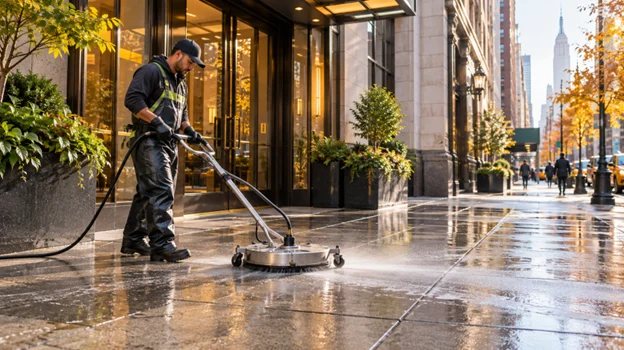
For most NYC commercial properties, sidewalks and entrances need pressure washing monthly for restaurants and busy retail, quarterly for offices and residential buildings, and facades every one to two years. Dumpster pads and trash areas usually need a monthly wash, and parking garages two to four times a year.
New York adds a constraint most pressure washing guides never mention: the calendar. City water rules restrict flushing sidewalks with a hose from November 1 through the end of March, and between 11:00 AM and 7:00 PM every day of the year. If your frontage has not been washed since spring, October is a useful time to plan a final sidewalk wash before winter. Use the guide below to plan commercial pressure washing across the five boroughs, and the rules that shape it.
A Frequency Guide by Surface and Business Type
These are planning intervals, not fixed rules. Greencap can assess traffic, stains and surface materials during a site visit and recommend a schedule for your property.
Frequency depends on two things: how much traffic and grease a surface takes, and how visible it is to customers and inspectors. Use this table as a starting point, then adjust after the first season.
| Surface or property | Recommended frequency | Why |
————————— | ———————————————————– |
| Restaurant, bar or food retail frontage | Monthly, plus spot cleaning | Grease, food spills and gum build up quickly and hold odor. |
| High-traffic retail and shopping corridors | Monthly to every six weeks | Gum and dark staining are visible from the street. |
| Office building entrances and plazas | Quarterly | Moderate traffic, high visibility for tenants and visitors. |
| Apartment building sidewalks and entrances | Quarterly, plus a fall wash | Leaf stain, pet waste and trash set-out areas. |
| Dumpster pads and trash areas | Monthly | Odor, pests and slip risk from leaking bags. |
| Parking garages and loading docks | Two to four times a year | Oil, tire marks and road salt residue. |
| Building facades (brick, stone, painted) | Every one to two years | Soot and biological growth; lower pressure methods only. |
| Storefront metal, awnings and signage | Quarterly to twice a year | Grime dulls the first thing customers see. |
Sweeping and washing do different jobs. Daily sweeping keeps you compliant with the city’s sidewalk rules, which we explain in our post on NYC sidewalk cleaning rules for businesses. Pressure washing removes what sweeping cannot: ground-in gum, grease and the dark film that makes a clean sidewalk still look dirty.
The NYC Calendar: When You Are Allowed to Wash
The city’s water-use rules (Title 15, section 20-08 of the Rules of the City of New York) set limits on using City water to flush sidewalks:
- No sidewalk flushing by hose or piping from November 1 through the last day of March.
- No flushing between 11:00 AM and 7:00 PM, any time of year.
- Flow limits on hoses. Buildings other than one to three family homes must use a fixture that flows no more than 2.5 gallons per minute.
- A full stop during a declared water alert or drought emergency, until the alert ends.
In practice this pushes commercial washing into early mornings and evenings, and it makes October the most important month of the year for exterior cleaning. Freezing temperatures are the other reason. Water left on paving in late fall refreezes overnight and turns a clean entrance into a slip hazard. Ask any vendor how their equipment, water source and schedule fit these rules before you sign.
Where the Wash Water Goes
Roughly 30 to 40 percent of NYC’s land area drains to separate storm sewers, which carry runoff straight to local waterways rather than to a treatment plant. The rest is served by combined sewers. Either way, degreaser, food waste and oily rinse water should not be sent down a catch basin.
- Sweep and bag loose debris first, so it is never washed into the gutter. The city’s sidewalk rules already prohibit pushing debris into the street.
- Pre-treat grease with the least chemical that works, and use hot water rather than extra detergent where possible.
- Block or recover wash water near storm drains when cleaning grease-heavy areas such as restaurant frontages and dumpster pads.
- Keep chemical use on the work order, so you know exactly what was applied to your property.
Get a site-specific fall washing quote Greencap Cleaning pressure washes sidewalks, entrances, garages and dumpster pads across NYC, scheduled around the city’s watering hours. Call (718) 687-4294 or request a free quote.
Pressure Washing vs Soft Washing: Match the Method to the Surface
Higher pressure is not better pressure. Using too much pressure on a delicate surface can damage mortar, stone or paint.
| Surface | Method | Watch out for |
————————————————- | —————————————————————————– |
| Concrete sidewalks and plazas | Hot water pressure washing with a surface cleaner | Striping from a handheld wand; use a rotary surface cleaner for even results. |
| Pavers and bluestone | Moderate pressure, then re-sand joints if needed | Blasting out joint sand and loosening stones. |
| Brick and mortar | Low pressure or soft wash | Eroding mortar joints and forcing water into the wall. |
| Brownstone and limestone | Soft wash with a stone-safe cleaner | Brownstone is a soft sandstone and scars easily under high pressure. |
| Painted surfaces and signage | Soft wash | Stripping paint and lifting vinyl lettering. |
| Storefront glass and metal | Low pressure rinse, then hand detail | Etching from harsh chemicals and water spotting. |
If your building is a designated landmark or sits in a historic district, check with the Landmarks Preservation Commission before any facade cleaning, since some methods need its approval. For glass above street level, commercial window cleaning is a separate service with its own safety requirements.
Signs Your Schedule Is Too Long
You do not need a calendar to know when a surface is overdue. These are the signs that the current interval is not keeping up:
- Gum spots have multiplied along the entrance path and at the curb.
- Dark, shiny staining has formed in front of a restaurant exhaust or delivery door.
- Green or black growth is appearing on north-facing walls, steps or planters.
- The dumpster area smells even after collection day.
- Tenants or customers mention slippery paving after rain.
- White, powdery deposits (efflorescence) are spreading across brick or concrete.
What to Include in Your Pressure Washing Quote
A useful quote should show exactly what is included. Ask the contractor to address:
- A pre-sweep and removal of loose debris and litter.
- Pre-treatment of gum, grease and organic staining.
- Hot water washing on concrete, with a surface cleaner for an even finish.
- Wash water control near catch basins on grease-heavy areas.
- A final rinse and inspection, with photos for multi-site clients.
- Scheduling outside restricted hours, usually early morning before 11:00 AM or after 7:00 PM.
Property managers often combine exterior washing with interior common area work. Our apartment building common area cleaning checklist shows how the fall wash fits into a year-round building schedule. For Brooklyn frontages, our Brooklyn power washing crews run the same program, and garbage removal can clear bulk items before the wash.
Final Thoughts
The right pressure washing schedule is monthly for food service and busy retail, quarterly for offices and residential buildings, and every one to two years for facades. In New York, the city’s water rules add a seasonal restriction on sidewalk washing by hose from November through March. Getting the fall wash done in October means your frontage goes into winter clean, and it gives salt and slush less to stick to.
Frequently Asked Questions
How often should a commercial building be pressure washed?
Sidewalks and entrances monthly for restaurants and busy retail, quarterly for offices and residential buildings, dumpster areas monthly, garages two to four times a year, and facades every one to two years with low pressure methods.
Can you pressure wash sidewalks in NYC in the winter?
NYC water-use rules prohibit flushing sidewalks with a hose from November 1 through the end of March and between 11:00 AM and 7:00 PM year round. Freezing temperatures also make winter washing a slip risk, so most properties schedule their last wash in October.
Is pressure washing safe for brick and brownstone?
Only at low pressure. Brick mortar and soft stone such as brownstone can erode under high pressure, so these surfaces should be soft washed with a stone-safe cleaner.
What is the difference between pressure washing and power washing?
The terms are often used interchangeably. Strictly, power washing uses heated water, which is better for grease and gum, while pressure washing uses cold water. Hot water is useful for grease and gum when the surface and job allow it.
Does pressure washing remove gum from sidewalks?
Yes, when it is done with hot water and the right pre-treatment. Cold water alone often smears gum rather than lifting it, which is why hot water equipment matters for storefronts.
This article is general information and is not legal advice. NYC water-use rules, drought declarations and landmark requirements can change. Verify current rules with NYC DEP and the Landmarks Preservation Commission before scheduling exterior work.
| Ready to get your frontage clean before winter?
Greencap Cleaning provides commercial pressure washing for businesses and buildings across Brooklyn, Manhattan, Queens, the Bronx and Staten Island. Call (718) 687-4294 or get a free quote. |