
Shopping Center and Multi-Tenant Retail Cleaning in NYC
Common area maintenance cleaning for landlords and property managers, with the tenant boundary defined instead of assumed.
Cleaning a shopping centre is a landlord’s problem, not a retailer’s, and that distinction is where most proposals go wrong. The landlord is responsible for the common areas, and the cost of cleaning them flows back to tenants through common area maintenance charges, which means the scope has to be defensible line by line to people who are paying for it and reading the reconciliation. Greencap Cleaning cleans commercial property across all five boroughs. This page covers the common area scope, the exterior obligations that carry city fines, and exactly where the landlord’s cleaning stops and a tenant’s own store cleaning begins.

What's Include
Interior common areas
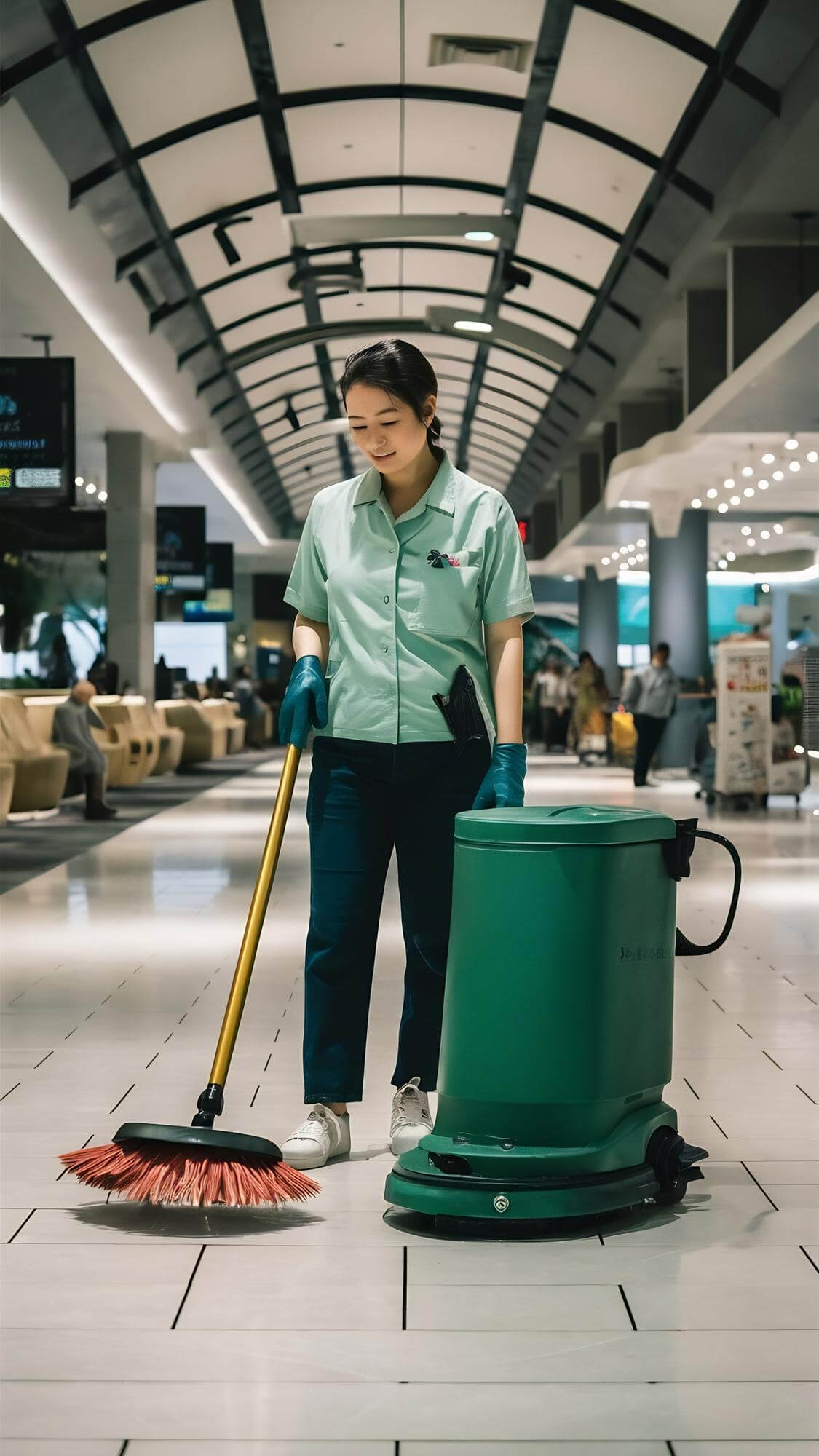
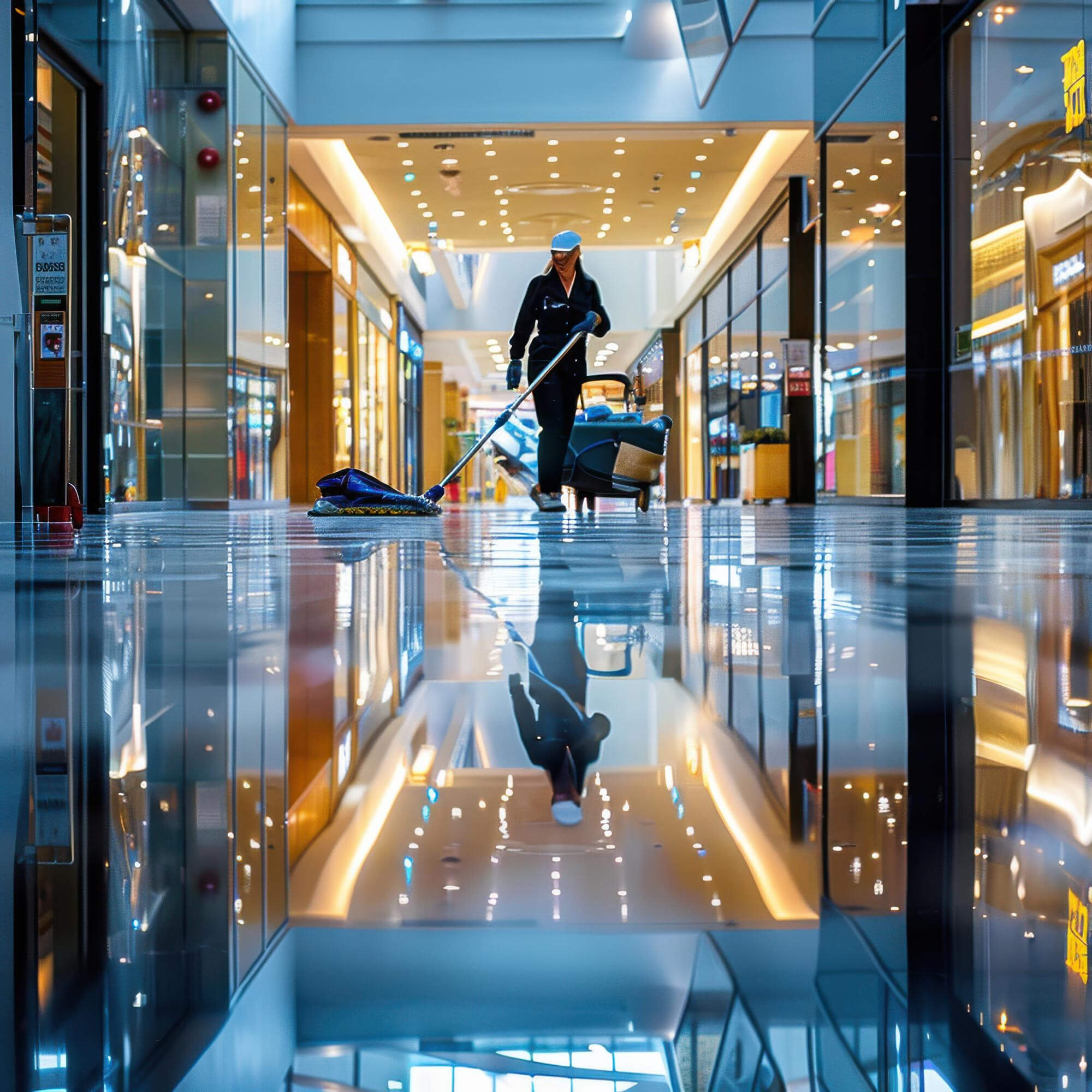
- Common corridors, atria and concourse floors: Swept, machine scrubbed and maintained by substrate, on a frequency that holds through trading hours rather than only looking right at opening.
- Common area restrooms on peak-hour frequencies: Serviced multiple times through the day with the frequency stepped up across peak trading periods, not held flat across a twelve-hour day.
- Escalator cabs, elevators and handrails: Cab interiors, mirrors, glass and handrail disinfection on the highest-touch frequency in the property.
- Escalator comb plates and skirt panels: Debris cleared from comb plates and skirt panels, which is a safety-critical point almost every cleaning specification omits.
- Stairwells, railings and glass balustrades: Including the metal and glass detailing that makes an atrium either look maintained or look tired.
- Directory signage and wayfinding: Directories, digital screens and wayfinding panels kept legible, which is a shopper experience item as much as a cleaning one.
Food court and high-soil areas
- Food court table turnover: Timed to meal periods rather than a nightly clock, because a food court at one in the afternoon is the property’s reputation.
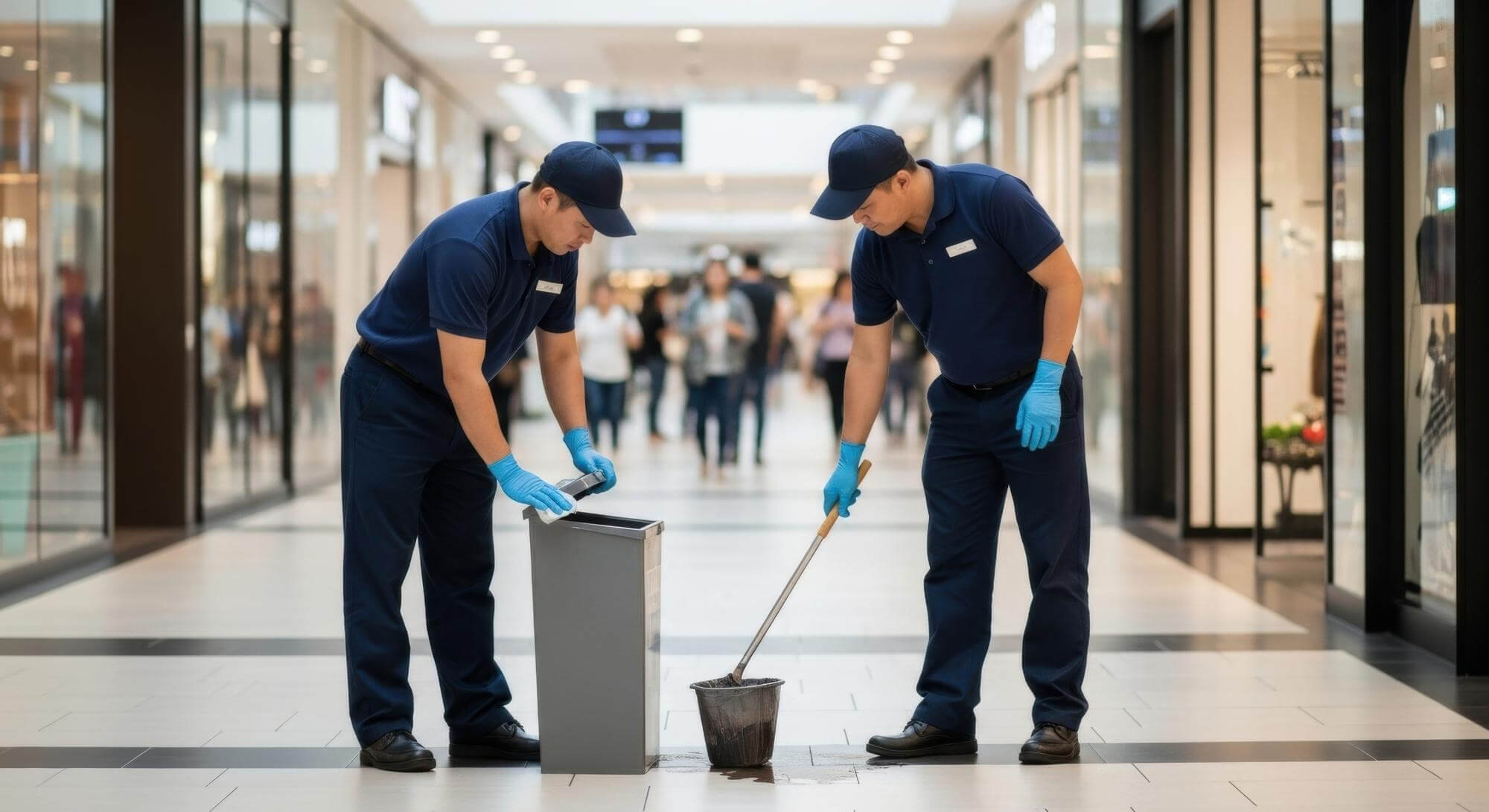
- Tray return and waste station servicing: Cleared and wiped on a continuous cycle through peak periods.
- Food court floor programme: Higher-frequency scrubbing and periodic deep cleaning, since food court floors absorb grease and fail faster than any other surface in the property.
- Common area seating: Hard and soft seating cleaned daily and deep cleaned periodically.
Exterior and back of house
- Sidewalk sweeping including the 18 inches: New York City requires property owners to clean the sidewalk and 18 inches from the kerb into the street, and sidewalk penalties escalate for repeat offences within twelve months.
- Snow and ice clearance at entrances and walkways: Cleared within the four-hour window the Administrative Code sets after snowfall stops, with the overnight period excluded, plus ice melt application.
- Parking lot and garage sweeping: Litter policing, sweeping and drain grate clearing on a set cycle, which is the first thing a shopper sees and the last thing most contracts fund.
- Loading dock and service corridor cleaning: The back-of-house areas tenants share, which nobody claims and everybody complains about.
- Common area waste and compactor servicing: Collection from common area receptacles, compactor and dumpster pad cleaning, and coordination with the property’s private carter arrangement.
- Common-area-side storefront glass: The landlord’s side of the demising line on storefront glazing, cleaned to a common standard so the concourse does not look patchy.
Seasonal and staffing model
- Wet-weather matting programme: Entrance matting checked and swapped at a frequency that escalates with the forecast, run as a scheduled service rather than a reaction to a wet floor.
- Day porter coverage during trading hours: Continuous presence handling spills, restrooms, food court and entrances while the property is open, which is a different labour line from the overnight crew.
- Overnight deep crew: Floor machines, deep restroom work, high dusting and glass done when the property is closed.
- Holiday and seasonal surge: Extended trading hours and higher footfall from late November onward need a planned uplift, plus cleaning around installed decor rather than through it.


Drawing the CAM Line, Which Nobody in This Market Does
Every NYC page ranking for retail cleaning is written for a single store. That leaves the actual multi-tenant question unanswered: where does the landlord’s cleaning stop and the tenant’s begin. It matters commercially, not just operationally, because common area cleaning is recovered through CAM charges and tenants scrutinise that reconciliation.
The line we work to is the demising line, the boundary of the leased premises. On the common side: concourses, atria, common restrooms, escalators and lifts, food court seating and floors, service corridors, the loading dock, the parking areas, the exterior and the property’s own waste stream. On the tenant side: everything inside the leased premises, including the store’s own floor, fixtures, back room and the interior face of its storefront glazing. Storefront glass is the classic dispute, so we state it explicitly in the scope: the common-area-facing side to the landlord’s standard, the interior to the tenant.
Getting this written down produces two benefits a landlord notices. The CAM charge becomes defensible because the scope document says exactly what tenants are funding. And the same document becomes the basis for offering tenants their own in-store cleaning as a separate contract, which is a straightforward additional revenue line for the property and a convenience for retailers who would rather have one contractor in the building than fifteen.
The exterior obligations deserve their own note, because they are the part that carries fines rather than complaints. A commercial property must clean the sidewalk and 18 inches from the kerb into the street, with penalties escalating for repeat offences inside a twelve month period. Sidewalk snow and ice must be cleared within four hours of snowfall stopping, excluding the overnight hours. And commercial waste cannot go out with city collection: it must go through a private carter, with the city’s commercial waste zone programme phasing in zone by zone across the boroughs, which changes which carters a property may use depending on its address and the date. We build the schedule against those deadlines and name them, so the property manager can see the compliance logic rather than trust it.
One claim to avoid, since it circulates widely in this industry: the ADA does not mandate wet floor signage. The ADA governs accessibility. Wet floor signage is standard premises liability practice and is supported by OSHA’s general requirement to keep floors clean and dry, but a vendor citing an ADA signage requirement is quoting something that does not exist.
Why Greencap Cleaning
A scope a tenant can read
Because common area cleaning is recovered through CAM, the document has to survive scrutiny at reconciliation. Ours lists included areas by name and states the demising line.
Two labour lines, priced separately
Day porter coverage and the overnight deep crew do different jobs and should be costed and staffed as different things. Blending them into one rate is how properties end up with neither.
The exterior obligations are named
Sidewalk, snow and waste deadlines are written into the schedule with the frequency that satisfies each, so compliance is scheduled rather than hoped for.
A route into tenant contracts
Once the CAM line is defined, individual retailers can contract their own in-store cleaning through the same crew, which is simpler for them and an additional line for the property.
Call (718) 687-4294 or request a walkthrough with Greencap Cleaning.
(718) 687 4294
How We Work
We walk it with the demising lines in hand and mark every square foot as common or tenant. Anything ambiguous, service corridors, shared back rooms, kerbside, gets decided at the walkthrough rather than at the first invoice.
Peak hours, meal periods, late nights, weekends and the seasonal calendar decide the frequency of every high-touch area. A single flat frequency across a trading day is the most common and most expensive error in these contracts.
Spills, restrooms, food court and entrances need presence while the doors are open. Floor machines, high dusting and deep restroom work need the doors closed. Each gets its own headcount and its own line in the budget.
Sidewalk sweeping, snow clearance and waste staging are timed to the rules that carry the fines, and the scope names those rules so the logic is visible to the property manager and to tenants.
Mat coverage and swap frequency escalate with the forecast, and the winter salt phase gets its own schedule. This is what protects the concourse floor through a New York winter.
A monthly record of the routine work, the periodic work completed, the exterior compliance tasks, and anything observed that needs a trade. It is a management document as much as a cleaning one, and it is what makes the CAM charge defensible.


New York City Does Not Really Have Malls, It Has Multi-Tenant Property
Outside a handful of enclosed centres, multi-tenant retail in this city means a strip on a commercial avenue, a ground-floor retail podium under residential floors, a converted industrial building with a dozen tenants, or a block with shared frontage and no interior common area at all. That changes what CAM cleaning means: often there is no concourse, and the common area is the sidewalk, the entrance, the service corridor, the trash area and the parking, if there is parking.
In that configuration the exterior obligations become almost the entire job, and they are the ones that carry fines. The sidewalk rule applies to every commercial frontage. The snow window applies whatever the format. And the waste arrangement is more complicated in a mixed-use podium, where residential collection and commercial private carting run alongside each other and the staging area is shared.
The other thing worth understanding about this market is that a landlord holding a strip of six or eight storefronts is not buying mall cleaning, they are buying compliance and kerb appeal for a modest budget. A scope written for an enclosed centre and scaled down will be both too expensive and wrong. We scope for the format the property actually is.
Who We Help
This page is for property managers, asset managers, landlords and leasing teams responsible for common areas at shopping centres, strip retail, retail podiums and multi-tenant commercial property in New York City. Individual retailers looking for in-store cleaning are covered on our retail stores page.
Enclosed shopping centres
Concourse, food court, common restrooms and a full day porter and overnight staffing model.
Strip retail and commercial avenue frontage
Where the exterior obligations, sidewalk and waste are effectively the whole common area scope.
Retail podiums under residential buildings
Two waste streams, two sets of rules, and a shared service area that belongs to neither party by default.
Outlet and power centres
Large parking areas, long walkway runs, and weather exposure as the main floor risk.
Mixed-use and converted industrial buildings
Multiple tenants, shared corridors and loading, and a demising line that has never been written down.
Supermarket-anchored centres
Where the anchor’s volume, waste and trolley traffic set the standard for the whole property.
Serving All Five Boroughs
We clean multi-tenant retail property across Manhattan, Brooklyn, Queens, the Bronx and Staten Island. Landlords and managing agents holding several properties can run them on one scope and one reporting format, which makes the CAM reconciliation consistent across the portfolio rather than different at every address.
Frequently Asked Questions (FAQs)
What is included in common area cleaning versus tenant cleaning?
The boundary is the demising line, the edge of the leased premises. On the common side we clean concourses and atria, common restrooms, escalators and lifts, stairwells, food court seating and floors, service corridors, the loading dock, parking areas, the exterior and the property’s own waste stream. On the tenant side is everything inside the leased premises, including the store’s floor, fixtures, back room and the interior face of its storefront glazing. Storefront glass is the classic dispute, so we state it in the scope: the common-area-facing side to the landlord’s standard, the interior to the tenant.
Should the property have cleaning staff on site during trading hours?
In any property with a food court, common restrooms or meaningful footfall, yes. A day porter handles the things that cannot wait for the overnight crew: spills, restroom servicing at peak, food court tables, entrance matting after rain, and litter. The overnight crew handles what needs the doors closed: floor machines, high dusting, deep restroom work and glass. Two labour lines, priced separately, because blending them produces a rate that funds neither properly.
What is a typical cleaning schedule for a shopping centre?
Restrooms and food court on a continuous cycle during trading hours with the frequency stepped up across peak periods. Concourse floors machine cleaned nightly. Escalator cabs, handrails, entrances and glass daily. Comb plates, high dusting, directory panels and deep restroom work weekly to monthly. Floor restoration, food court deep cleaning and parking area sweeping on a periodic calendar with dates. Exterior sidewalk and waste tasks on the compliance schedule. A single flat frequency across the whole property is the most common error and it overspends on quiet areas while underserving the busy ones.
Do you handle the sidewalk and snow obligations?
Yes, and they are the parts of this contract that actually carry fines. New York City requires property owners to clean the sidewalk and 18 inches from the kerb into the street, with penalties that escalate for repeat offences within twelve months. Sidewalk snow and ice must be cleared within four hours after snow stops falling, excluding the hours between nine at night and seven in the morning. We build the visit schedule around both, apply ice melt where ice cannot be safely broken up, and name the requirements in the scope so the compliance logic is visible rather than assumed.
How does commercial waste work at a multi-tenant property?
City collection does not serve commercial waste, so the property or its tenants must contract a private carter. New York City has been rolling out a commercial waste zone programme borough by borough, which assigns which carters a business in a given zone may use, and the rollout dates differ by zone. That is a contracting question for the property rather than a cleaning one, but it affects our work directly, because it determines where waste is staged and when it can go out. We coordinate the cleaning schedule with whatever arrangement the property has, and we would rather confirm your zone status than assume it.
How often should trash be removed from common areas?
Continuously during trading hours in a food court, and on a set cycle elsewhere. The practical measure is that no common area receptacle should ever be visibly full during trading, which in a busy food court means a porter passing every twenty to thirty minutes at peak and far less often mid-morning. Compactor and dumpster pad cleaning is separate periodic work and should be scheduled with dates rather than done when someone complains.
Can you clean individual tenant stores as well?
Yes, as separate contracts. Once the CAM scope is defined, individual retailers can contract their own in-store cleaning through the same crew, which is simpler for them than sourcing separately and gives the property a consistent standard on both sides of the demising line. It has to be a separate contract and a separate invoice, because tenant cleaning is not a CAM cost and should never be recovered as one.
What changes during the holiday season?
Trading hours extend, footfall rises sharply, and decor gets installed in exactly the places that need cleaning. All three need planning rather than reaction. We build a seasonal uplift into the annual scope with the dates named, agree in advance how the crew works around installed decor and who is responsible for cleaning it, and step up matting and floor frequency because winter weather arrives at the same time as the peak. Arranging this in November costs more and delivers less.
Get Started
Greencap Cleaning serves commercial and institutional clients across all five boroughs from a base in Brooklyn. Call (718) 687-4294 or request a walkthrough to talk about shopping center cleaning. We will tell you what the job actually involves, including the parts that are not ours to do.
(718) 687 4294