
Manufacturing and Food Production Facility Cleaning in Brooklyn
Production-side cleaning with GMP zoning, combustible dust housekeeping, and a hard line at the machine guard.
Cleaning a production facility is a different discipline from cleaning a warehouse, and treating them as one service is why most industrial cleaning proposals read as though nobody has been on a plant floor. A production environment has running equipment, guarded machinery, zoning rules, dust that can be a fire hazard rather than an eyesore, and floors that fail if you use the wrong pad. Greencap Cleaning works across Brooklyn and all five boroughs. This page covers the production side specifically: food manufacturing, commercial bakeries, beverage, light manufacturing, machine and print shops, and where our crew’s authority stops.
What's Included
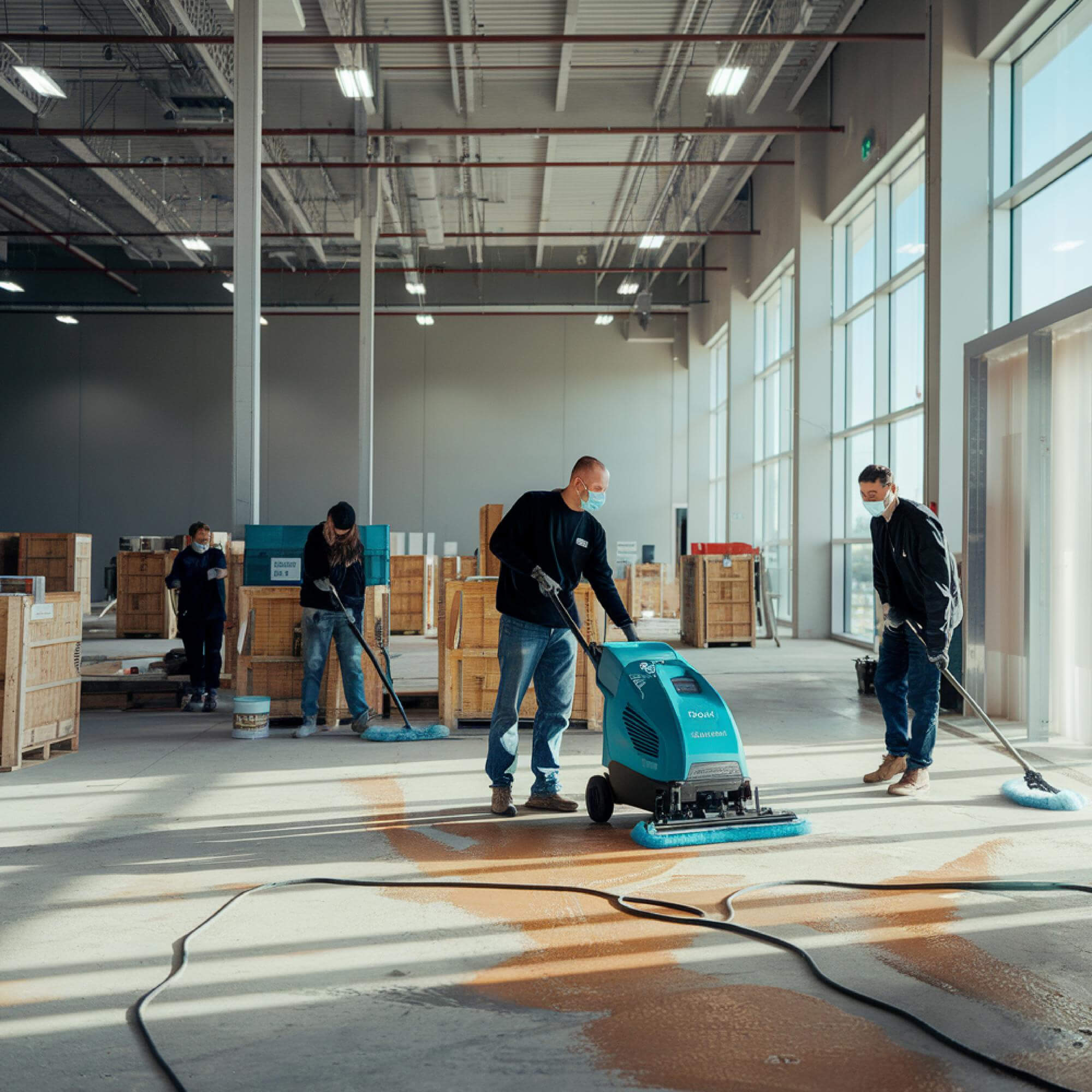
Production floor
- Production floor cleaning to a defined boundary: Aisles, walkways, around-equipment areas, walls and columns in the splash zone, and the interface with your own sanitation crew where you have one.
- Machine exterior and surround, never inside the guard: We clean the outside of guarded machinery and the floor and structure around it. We do not open guards or clean inside the point of operation. See the boundary section below for why that is not negotiable.
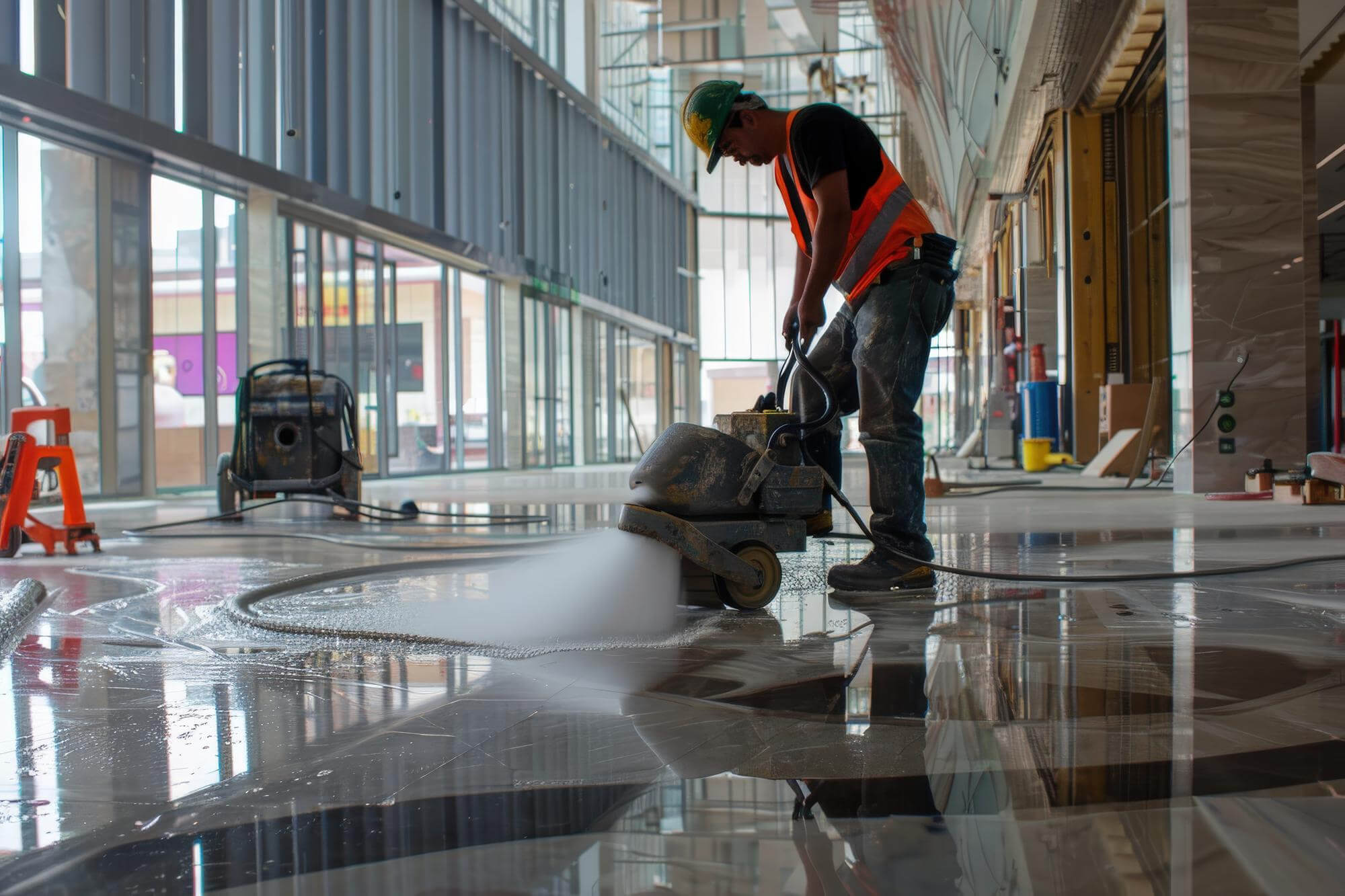
- Floor scrubbing by substrate: Sealed and polished concrete, epoxy coating and VCT each take a different pad and a different chemistry. Running one programme across all three is how a plant loses a coating.
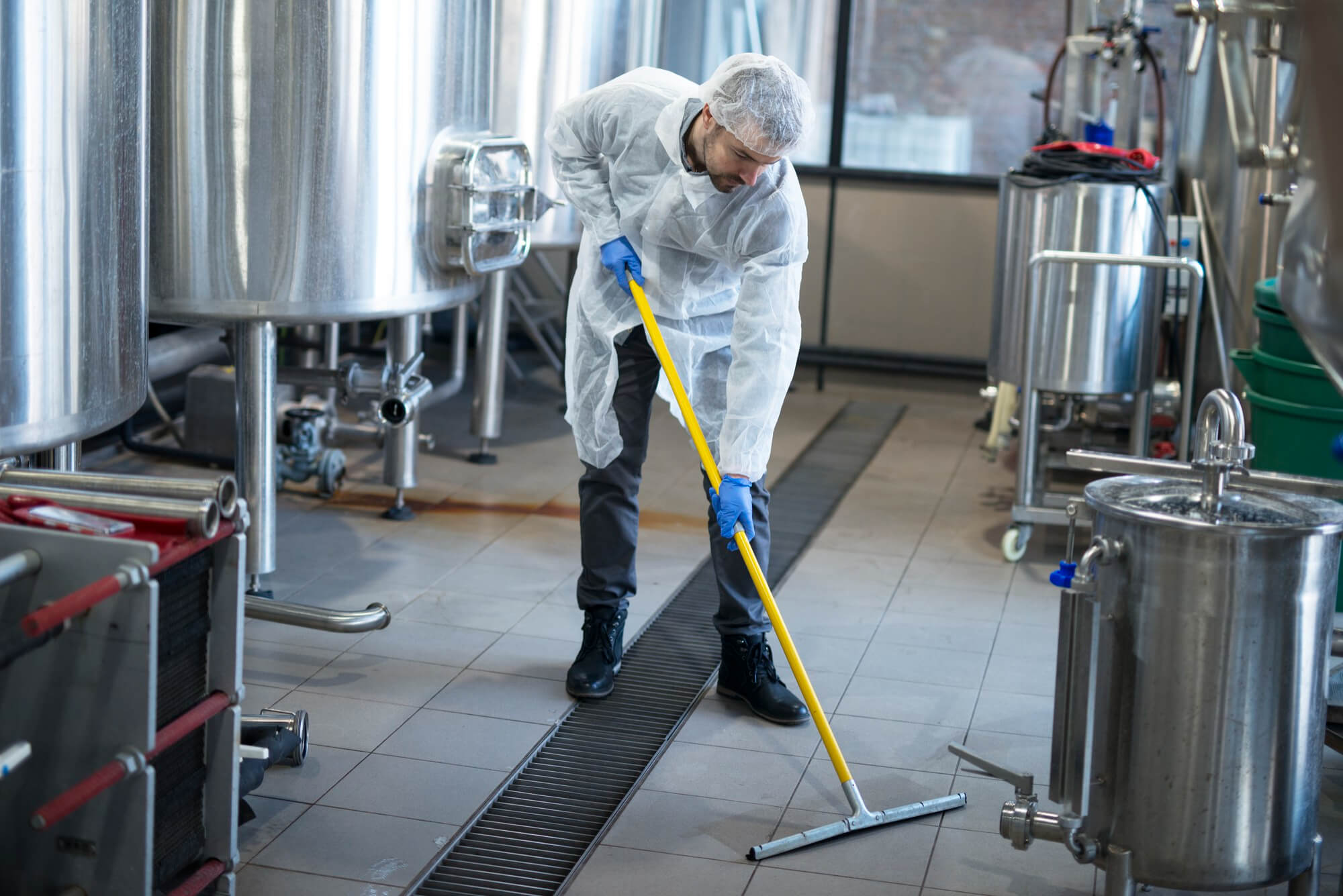
- Floor drains and trench drains: Cleaned and flushed on a set cycle, because drains are where a food plant’s problems begin and where an inspector looks first.
- Overhead and high dusting: Rafters, joists, pipe runs, conduit, cable trays and sprinkler heads, done on a schedule rather than when it becomes visible from the floor.
- Combustible dust housekeeping: Scheduled removal of accumulated dust from horizontal surfaces, ledges, beams and above suspended ceilings. This is a fire and explosion control, not a tidiness task, and it is treated as one.
Food production specifics
- Allergen changeover cleaning: Wet or dry clean between production runs, executed to your own written sanitation procedure rather than to our generic method, because the procedure is yours and the record is yours.
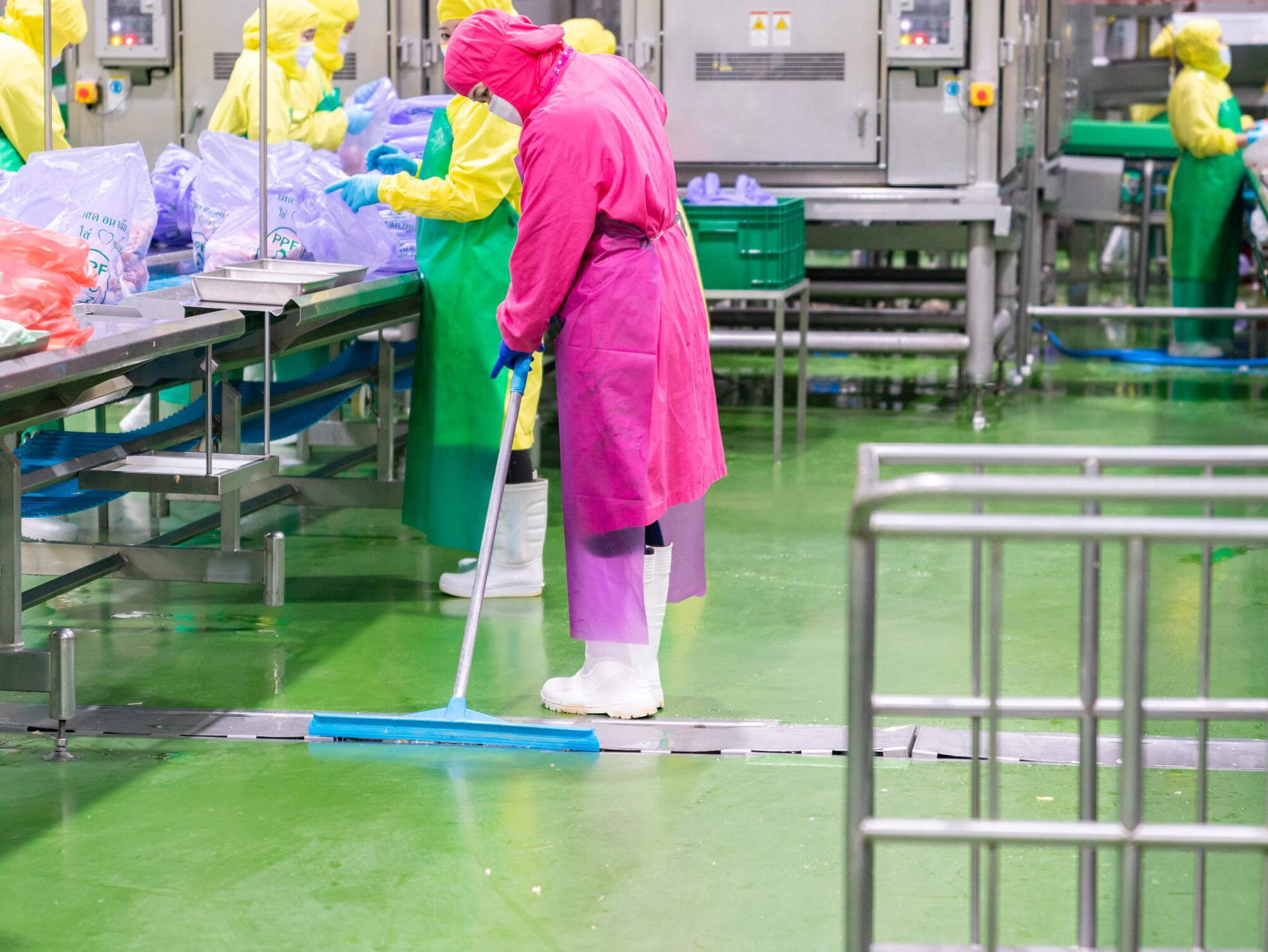
- GMP zoning and colour-coded tool segregation: Dedicated mops, cloths, squeegees and equipment per zone, so a tool from a low-care area cannot travel into a high-care area. This is the same logic your production team already runs on.
- Wall, ceiling and light fixture cleaning: Grease film and dust removal from ceilings, diffusers and fixtures, which is the work that most often shows up as an audit finding.
- Ductwork exterior cleaning: Visible exterior of HVAC and exhaust ductwork. Interior duct cleaning is a separate specialist service and we will say so rather than quote it.
Support and logistics areas
- Dock, staging and levelling areas: Dock plates, levellers, bumper areas and staging lanes, which take the worst of the traffic and get skipped most often.
- Forklift battery charging areas: Acid-resistant floor cleaning and spill containment area maintenance, handled with the right chemistry rather than the general floor product.
- Waste, compactor and baler areas: Compactor pads, baler surrounds and the routes to them kept clean so the housekeeping standard does not stop at the production door.
- Break rooms, locker rooms and restrooms: Cleaned on separate tools from the production zones, on the frequency shift patterns actually require rather than a single nightly pass.
- Production-adjacent offices and glass: Supervisor offices, QA rooms and interior glazing, on the office tool set.


The Lockout Boundary, and Three Credentials That Do Not Exist
The most important sentence on this page is that our crew does not de-energise your equipment. Under OSHA’s lockout and tagout standard, 29 CFR 1910.147, only authorised employees may lock out or tag out machinery for servicing, and the standard specifically addresses outside contractors: the on-site employer and the outside employer have to inform each other of their respective procedures, and the on-site employer must ensure its own people comply with ours. In practice that means the plant’s authorised employee performs the lockout, our crew works only after that is confirmed, and nobody on our team is opening a guard because a supervisor was in a hurry. Cleaning contractors who are vague about this are describing a workflow that puts their own staff at risk in your building.
The second thing worth being straight about is credentials. There is no FDA-certified cleaning company. FDA’s current good manufacturing practice requirements in 21 CFR Part 117 place sanitation obligations on the food facility operator, not on the janitorial vendor, and FDA issues no vendor certificate. OSHA does not certify companies either; it publishes standards and enforces them. And HACCP is a food safety plan certified for a facility by a third-party certifying body, not a badge a cleaning contractor carries around. Competitors on this search result advertise all three. A cleaning contractor’s honest position is that it works to your written sanitation procedures and your GMP requirements, and that your licence, in New York State an Article 20-C food processing establishment licence for many food manufacturers, remains yours.
The third clarification concerns combustible dust. There is no single numbered OSHA combustible dust standard. OSHA addresses it through the General Duty Clause together with the housekeeping standards at 29 CFR 1910.22 and 1910.176(c), plus its combustible dust guidance and national emphasis programme. Any vendor citing a dedicated combustible dust standard by number is quoting something that is not there. What is real is the housekeeping obligation, and that is a scheduled cleaning task we can carry.
Why Greencap Cleaning
Scoped around your procedures, not ours:
In a food plant the sanitation standard operating procedure is yours and the record is yours. We execute to it and document what we did, rather than substituting a generic method and calling it compliance.
The guard line and the lockout line are contractual
The scope names what our crew will not touch and under what conditions work near equipment happens, which is the difference between a contractor who has worked in plants and one who has not.
Dust is scheduled, not reactive
Overhead and high dusting sits on a calendar with dates. Waiting until accumulation is visible from the floor is how a housekeeping obligation becomes a hazard.
Production hours are the constraint we plan around
Shift changeovers, weekend windows and short between-run gaps are when this work actually fits. We size the crew to the window rather than asking you to widen it.
Call (718) 687-4294 or request a walkthrough with Greencap Cleaning.
(718) 687 4294
How We Work
Walk the plant with production and with safety
Two people have to be in the walkthrough: someone who knows the schedule and someone who owns safety. The schedule sets when we can work, and safety sets where our crew may and may not be.
Zone the facilit
High care, low care, non-production and office areas are mapped, and each gets its own colour-coded tool set, its own chemistry and its own frequency. Zoning is done before pricing, because it changes both.
Agree the equipment protocol in writing
Which surfaces our crew cleans, which require a plant authorised employee to lock out first, and which are entirely out of scope. Both employers' lockout procedures are exchanged, as the standard requires.
Calendar the periodic work
High dusting, combustible dust removal, drain cleaning, ceiling and fixture cleaning and floor refinishing are dated on an annual calendar. Routine cleaning cannot absorb them and should not be asked to.
Execute to the run schedule
Routine work runs in the gaps your production schedule actually leaves: between shifts, during changeovers, on the weekend window. Allergen changeover cleans run to your procedure, on your trigger, not on ours.
Document and hand back
Each visit produces a record of what was cleaned, what was deferred and why, and anything the crew observed that belongs to maintenance. In an audited facility the record is part of the deliverable, not an afterthought.

Light Manufacturing in Brooklyn Is Not a Plant in an Industrial Park
Brooklyn’s production space is mostly small, vertical, and old. Sunset Park, Bushwick, East Williamsburg, Greenpoint and the Brooklyn Navy Yard hold a large number of commercial bakeries, food producers, print shops, fabricators and light manufacturers operating on one or two floors of a multi-tenant industrial building, sharing a freight lift with three other businesses. That constrains cleaning in ways a suburban plant never sees.
Equipment has to fit in a freight lift and often has to be carried up a half-flight. Loading is kerbside rather than at a dock, so the dock area you are paying to have cleaned may be a sidewalk. Overhead work in a building with fourteen-foot ceilings and original beams collects dust that a modern facility’s ceiling would not hold. And in a multi-tenant building your waste arrangement runs alongside other tenants’ carters, which makes staging and timing a shared problem.
The other Brooklyn reality is scale. A twelve-person bakery running two shifts does not need the crew a regional plant needs, but it needs the same zoning discipline, the same dust schedule and the same drain cycle. We size crews for buildings like that rather than quoting a plant contract and scaling it down badly.
Who We Help
This page is for plant managers, operations managers, quality managers and owners of production facilities in Brooklyn and across New York City. If your building is primarily storage and distribution rather than production, the warehouse and distribution page is the better fit and the scope is genuinely different.
Commercial bakeries and food producers
Allergen changeover, GMP zoning, drains and overhead work under an inspection regime.
Beverage and bottling operations
Wet floors, drain load, and equipment surrounds that need the right chemistry.
Light manufacturing and assembly
Machine surrounds, dust control, dock and staging areas, and shift-based scheduling.
Machine and fabrication shops
Metal fines, cutting fluid residue, and floors that take a beating.
Print and packaging operations
Paper dust as a combustible dust question, ink handling areas, and high dusting on a real schedule.
Multi-tenant industrial buildings
Where the freight lift, the shared loading area and the neighbouring tenants shape every plan.
Serving All Five Boroughs
We clean production and industrial space across Brooklyn, Manhattan, Queens, the Bronx and Staten Island. Multi-site operators can hold every facility on one scope, which makes the periodic work easier to calendar because the equipment and the trained crew move between sites.
Frequently Asked Questions (FAQs)
What is the difference between industrial cleaning and janitorial services?
Janitorial work is the recurring cleaning of occupied space: floors, restrooms, waste, glass, surfaces. Industrial or plant cleaning covers the production environment, where the work is governed by the equipment, the zoning and the hazards rather than by occupancy. In practice the differences are the tool discipline, the periodic work such as high dusting and dust removal, the floor substrates, and the fact that a significant portion of the scope is about what the crew must not do. Most production facilities need both, run as separate lines in one contract.
Can your crew clean inside machine guarding or near running equipment?
Not inside guarding, and not on equipment that has not been de-energised by your own authorised employee. OSHA’s lockout and tagout standard at 29 CFR 1910.147 reserves lockout to authorised employees, and it requires the on-site employer and the outside contractor to exchange their lockout procedures. Our crew cleans machine exteriors, surrounds, floors and structure. When cleaning requires access inside a guard, your authorised employee performs the lockout and confirms it before our crew begins. We would rather lose a line item than have that arrangement be informal.
Is a cleaning company required to be certified for food production facilities?
No, and any vendor telling you it is FDA certified or HACCP certified is describing something that does not exist for a janitorial contractor. FDA’s good manufacturing practice requirements under 21 CFR Part 117 place sanitation duties on the food facility, and HACCP certification is issued to a facility by a third-party certifying body. In New York State, many food manufacturers hold an Article 20-C food processing establishment licence from the Department of Agriculture and Markets, and that licence is the facility’s. What a cleaning contractor can properly offer is trained crews executing your written sanitation procedures with documented results.
What is allergen changeover cleaning and can you do it?
It is the cleaning performed between production runs to prevent allergen cross-contact, executed as a wet clean or a dry clean depending on the line and the allergen. Yes, we can carry it, with an important condition: it runs to your written sanitation standard operating procedure, on your trigger and with your verification step, not to a method we bring in. The procedure and the record belong to the facility because the food safety responsibility does. We supply the trained labour and the documentation of what was done.
What is combustible dust housekeeping and who is responsible for it?
It is the scheduled removal of accumulated dust from horizontal surfaces, ledges, beams, ductwork exteriors and above suspended ceilings, in facilities where the dust can ignite or explode. Responsibility sits with the employer operating the facility. There is no single numbered OSHA combustible dust standard, which surprises people: OSHA enforces through the General Duty Clause together with the housekeeping requirements at 29 CFR 1910.22 and 1910.176(c), supported by its combustible dust guidance and national emphasis programme. We carry the housekeeping as a dated, scheduled task, which is the practical form the obligation takes.
How often should a production facility be cleaned?
Routine cleaning in most production environments is daily or per shift, because it follows the production schedule rather than a calendar. The periodic work is where the real variation is: drains monthly or more often in a wet food environment, high dusting quarterly to semi-annually depending on dust generation, floor refinishing annually or on condition, and ceiling and fixture cleaning on a longer cycle. We set those intervals from what your facility actually produces, and we would rather tell you a quarterly interval is too long for your dust load than sell you a cheaper schedule that fails an audit.
Do you work around our shift schedule?
That is normally the only way plant cleaning works. The usual windows are the gap between shifts, a changeover, a weekend shutdown, or a planned annual shutdown for the heavy periodic work. We size the crew to the window instead of asking you to extend it, and where a task genuinely cannot fit in the available gap we will say so at the quote stage rather than discovering it in month three.
Do you clean warehouses too, or only production areas?
Both, but as different scopes. Storage and distribution space has its own requirements: rack cleaning, aisle sweeping, dock work and high-bay dusting, with a different equipment set and a different safety picture around live forklift traffic. If your building is primarily a warehouse, the warehouse and distribution page describes that work. If it is a plant with storage attached, one contract can cover both with each area scoped separately.
Get Started
Greencap Cleaning serves commercial and institutional clients across all five boroughs from a base in Brooklyn. Call (718) 687-4294 or request a walkthrough to talk about manufacturing and plant cleaning. We will tell you what the job actually involves, including the parts that are not ours to do.
(718) 687 4294